24-Port CAT6 Patch Panel Premium Line Unshielded Dual Type IDC Black 180 degrees RJ45 Ethernet (Made in Germany) (TA1808) Products
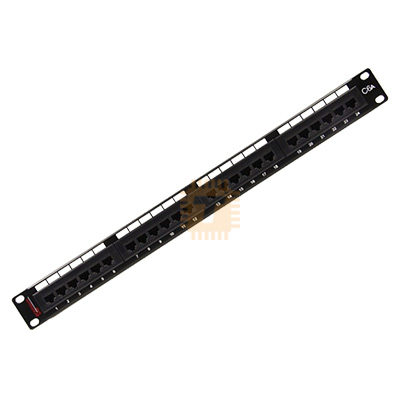
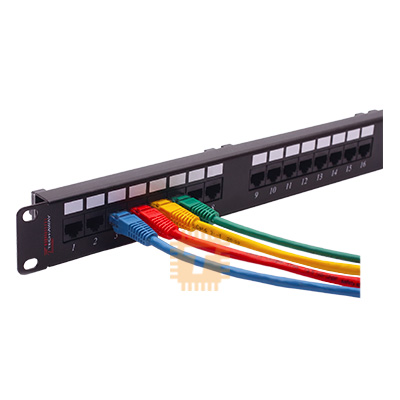
| Name | 24-Port CAT6 Patch Panel Premium Line Unshielded Dual Type IDC Black 180 degrees RJ45 Ethernet (Made in Germany) |
| Code | TA1808 |
| Price | Rs.24,960.00 |
| In Stock | Yes |
| Package | NETWORK |
Product Details
This premium 24-port Category 6 unshielded (UTP) patch panel is a high-density, rack-mounted network hub engineered to strict German quality standards. Occupying a 1U rack space, this panel features a 180℃ straight-through physical profile (where the cable enters straight into the rear of the port) and a versatile Dual-Type IDC termination block. It is designed to act as the central consolidation point for incoming solid-core horizontal subsystem cables, delivering seamless gigabit performance across enterprise local area networks.
Specification
- Port Density: 24-Ports (High-Density RJ45 inline configuration)
- Rack Unit Height: 1U (approx 1.75 inches / 44.45mm)
- Rack Width Compatibility: Standard 19-Inch EIA-310 Compliant
- Cable Category: Category 6 (CAT6 Component & Channel Certified)
- Shielding Type: UTP (Unshielded Twisted Pair)
- Angle Profile: 180℃ Straight-Through rear wire entry
- IDC Block Type: Dual Type IDC (Compatible with both Krone and 110 punch-down tools)
- Conductor Wire Gauge: Accommodates 22 - 26 AWG solid or stranded copper wires
- Maximum Bandwidth: 250 MHz
- Frame Material: Heavy-Duty, Cold-Rolled Carbon Steel with matte black powder coating
- Manufacturing Standard: Engineered / Made in Germany
Features
- Universal Dual-Type IDC Blocks: The rear termination blocks are uniquely configured to accept both 110-style and Krone-style impact punch-down tools. This gives field technicians complete flexibility without needing to swap out tool blades mid-job.
- 180-Degree Straight Entry Layout: Wires are punched directly into the rear face of the panel inline with the front RJ45 ports. This horizontal 180℃ orientation makes it incredibly easy to punch down wires from the back of the rack and allows for simple cable depth planning.
- Heavy-Duty Steel Backplane with Built-In Strain Relief: The structural steel chassis includes an integrated rear management bar with anchor points. This supports the structural weight of all 24 bundles, preventing sagging and eliminating physical tension on the delicate IDC connections.
- Scratch-Resistant Numbering & Labeling: The front panel face features bold, high-contrast pre-printed port numbers (1-24) alongside dedicated white write-on blocks, enabling rapid network mapping and circuit identification.
Common Applications
- Enterprise Server Room Centralization: Serving as the primary distribution hub in standard 19" racks, connecting horizontal floor drops to core managed network switches.
- Commercial Office Fit-Outs: Consolidating all incoming Cat6 copper lines originating from cubicle wall faceplates and floor boxes.
- Data Center Top-of-Rack (ToR) Architecture: Organizing patch zones directly above high-density server blades to simplify hardware swaps.
- Structured Smart Home Automation: Acting as the termination focal point for smart home networking lines, IP cameras, and automation controllers.
Professional Usage & Deployment Tips
- Preserve the Internal Pair Twist: When strip-prepping your solid-core network cables, do not untwist the internal wire pairs more than 0.5 inches (13mm) before punching them into the IDC slots. Keeping the pairs tightly twisted to the terminal point dramatically lowers Near-End Crosstalk (NEXT) and protects signal integrity.
- Align the Impact Blade Appropriately: Always double-check your punch-down tool before striking. Ensure that the sharp "CUT" side of the blade is facing outward, away from the center of the terminal block. Reversing the tool will slice your internal lines and ruin the terminal routing.
- Secure with Hook-and-Loop (Velcro) Straps: Avoid using tight plastic zip-ties on the rear cable support bar. Instead, use soft Velcro straps to bundle the cables in groups of 6 or 12. Plastic ties can crush the internal cable geometry, introducing structural attenuation and degrading performance.
- Match Wiring Layouts Consistently: Ensure that both this patch panel and the remote wall faceplates are wired to the exact same standard. Look at the universal color schematic printed on the panel's PCB circuit and pick either T568B (standard industry preference) or T568A. Consistently using one standard across the entire install prevents split-pair connection errors.
Sharing is caring, show love and share the product with your friends.
Featured


Add to Cart


Other Products
Add to Cart