Anycubic Standard Light Beige Color Resin LCD 405nm UV Sensitive Resin 1kg (TA1900) Products
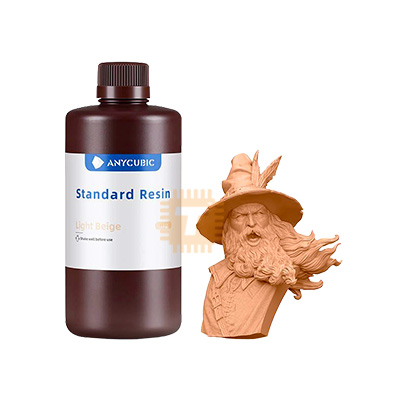
| Name | Anycubic Standard Light Beige Color Resin LCD 405nm UV Sensitive Resin 1kg |
| Code | TA1900 |
| Price | Rs.6,000.00 |
| In Stock | Yes |
| Package | ACC |
Product Details
The Anycubic Standard Light Beige Color Resin LCD 405nm UV Sensitive Resin 1kg is a professional-grade, photocurable liquid resin engineered specifically for LCD, MSLA, and DLP 3D printers operating on the standard 405nm UV wavelength spectrum. Formulated with balanced low viscosity and controlled curing kinetics, it ensures high printing speeds, crisp detail resolution, and minimal volumetric shrinkage during polymerization. Its smooth, opaque light beige (skin/flesh tone) matte finish naturally highlights subtle surface contours and fine micro-textures, making it the ideal choice for tabletop miniatures, portrait busts, organic figurines, architectural scale models, and industrial design mockups.
Specifications
- Product Type: Photopolymer Liquid 3D Printing Resin
- Brand / Series: Anycubic Standard Photopolymer Resin
- Nominal Net Weight: 1 kg (1000 g / ~2.2 lbs)
- Color / Cured Finish: Light Beige (Opaque flesh/neutral skin tone with smooth satin-matte surface)
- Target UV Curing Wavelength: 365 nm to 405 nm (Optimized for standard 405nm UV LED arrays)
- Liquid Density: 1.100 g/cm³ to 1.150 g/cm³ (at 25°C)
- Solid Density: 1.150 g/cm³ to 1.200 g/cm³ (at 25°C)
- Viscosity: 150 to 250 mPa·s (at 25°C / Low-viscosity formulation for rapid vat leveling)
- Tensile Strength: 36 MPa to 45 MPa
- Elongation at Break: 8% to 15%
- Flexural Strength: 50 MPa to 65 MPa
- Flexural Modulus: 1000 MPa to 1400 MPa
- Shore Hardness: 82D to 84D (Rigid, dimensionally stable cured state)
- Volumetric Shrinkage: ≤ 3.72% to 4.24% (Low contraction for accurate geometric tolerances)
- Recommended Ambient Operating Temperature: 20°C to 30°C (Optimal performance at 25°C)
- Typical Exposure Parameters (Monochrome LCD, 50 μm layer height):
- Normal Layer Exposure: 1.8 to 2.8 seconds
- Bottom / Base Layer Exposure: 20 to 35 seconds
- Bottom Layer Count: 4 to 6 layers
- Typical Exposure Parameters (RGB LCD, 50 μm layer height):
- Normal Layer Exposure: 7.0 to 9.0 seconds
- Bottom / Base Layer Exposure: 50 to 70 seconds
- Compatible Printer Architectures: Anycubic Photon Series, Elegoo Mars/Saturn, Creality Halot, Phrozen Sonic, and standard 405nm MSLA/LCD/DLP resin systems
- Container: Heavy-Duty UV-Blocking Aluminum / HDPE Leak-Proof Bottle with Inner Seal Cap
Features
- High Precision & Low Shrinkage: Optimized photoinitiator balance minimizes resin shrinkage during layer exposure, yielding sharp corners, micro-embossing, and tight mating tolerances for multi-part models.
- Excellent Detail Contrast: The opaque light beige tone scatters light evenly across organic geometry, making fine sculpted details like facial features, muscle definition, and textile folds pop without requiring primer.
- Low Viscosity & Fluid Flow: Low fluid resistance ensures quick resin backflow across the build plate between lift cycles, reducing peel suction forces and shortening layer print times.
- High Compatibility: Formulated to cure efficiently across monochrome and standard color LCD screens, as well as DLP optical projection systems utilizing 405nm light sources.
- Easy Post-Processing & Sanding: Cures to a firm 84D Shore hardness that trims cleanly with hobby knives, sands smoothly without gumming up abrasives, and readily accepts acrylic paints and hobby primers.
Common Applications
- Figurines & Character Sculptures: Printing detailed fantasy miniatures, character models, anime figures, and portrait busts requiring an authentic neutral skin base tone.
- Architectural Concept Models: High-resolution exterior building facades, miniature stone mockups, and scale structural elements for architectural presentations.
- Industrial Product Design Prototyping: Ergonomic mockups, cosmetic shells, handheld enclosures, and aesthetic verification samples for consumer hardware.
- Dental & Educational Study Models: Printing non-clinical diagnostic study casts, anatomical bone models, and educational demonstration pieces.
- Jewelry & Prop Master Castings: Creating master prototypes and display pieces with crisp edge retention and uniform opaque coloring.
Usage Tips
- Agitation & Preparation (CRITICAL):
- Shake the bottle vigorously for 1 to 2 minutes before pouring into the resin vat.
- Dense color pigments naturally settle at the bottom over time. Thoroughly shaking ensures uniform pigment suspension, preventing two-tone banding or cure inconsistencies during long print runs. Let the poured resin rest in the vat for 5 to 10 minutes to allow entrapped air bubbles to disperse before initiating the print.
- Operating Temperature Control:
- Maintain ambient printing temperature strictly between 20°C and 30°C.
- Cold resin (below 20°C) significantly increases viscosity and slows chemical reactivity, frequently causing layer delamination, bottom-layer adhesion failure, or support detachment. In cold workshops, warm the sealed bottle in a lukewarm water bath (~30°C) before pouring.
- Post-Wash Protocol:
- Wash uncured surface resin using ≥ 95% Isopropyl Alcohol (IPA) or high-grade Ethanol in an ultrasonic bath or dedicated wash-and-cure station for 3 to 5 minutes max.
- Avoid soaking printed parts in alcohol for extended periods (>10 minutes), as prolonged solvent contact causes surface swelling, micro-cracking, and soft, chalky surfaces.
- Drying & Post-Curing:
- Thoroughly air-dry the model or blow-dry it with compressed air until all solvent residue has completely evaporated. Never post-cure a part while it is still damp with alcohol, as this leaves a permanent white, cloudy residue on the beige surface.
- Post-cure under a 405nm UV chamber for 2 to 5 minutes (depending on model thickness), rotating the part to achieve uniform surface hardness. Avoid over-curing, which can make thin details brittle.
- Personal Protective Equipment (PPE) & Safety:
- Always wear nitrile gloves (latex gloves are permeable to liquid photopolymers), safety goggles, and work in a well-ventilated space or under an active carbon fume filter.
- Never wash liquid resin down household or commercial drains. Filter and cure contaminated alcohol or paper towels in sunlight before disposing of them in accordance with local regulations.
Sharing is caring, show love and share the product with your friends.
Featured

Add to Cart

Add to Cart

Add to Cart

Add to Cart