
DP-366D Desoldering Pump Sucker (TA1885) Products

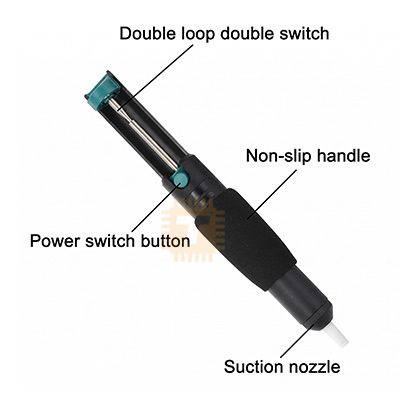
| Name | DP-366D Desoldering Pump Sucker |
| Code | TA1885 |
| Price | Rs.500.00 |
| In Stock | Yes |
| Package | DEPUMP |
Product Details
The DP-366D Desoldering Pump Sucker is a professional-grade manual desoldering tool engineered for high-efficiency extraction of molten solder from printed circuit boards (PCBs), through-hole joints, connector pins, and discrete electronic components. Featuring a double-ring, double-air-open vacuum piston design, it creates a powerful instantaneous negative suction vacuum (up to 32 cm-Hg) that removes solder in a single stroke with minimal kickback. Built with a lightweight, high-impact non-slip ABS plastic housing and an anti-static, heat-resistant PTFE (Teflon) nozzle, the DP-366D ensures ESD-safe operation while protecting delicate PCB copper pads and semiconductor pins from thermal and mechanical stress.
Specifications
- Brand / Model: Pro'sKit / Industry Standard DP-366D (Professional Desoldering Pump Series)
- Tool Type: Manual Spring-Loaded Mechanical Plunger Desoldering Pump
- Suction Capability: ≥ 32 cm-Hg (Approx. 42.7 kPa Peak Instantaneous Negative Pressure)
- Piston Seal Mechanism: Dual O-Ring Oil Seal System (Double-Seal Airtight Vacuum Chamber)
- Housing Material: High-Impact, Flame-Retardant Engineered ABS Plastic (Lightweight & Corrosion-Free)
- Grip Design: Textured Ergonomic Non-Slip Body with Recessed Cocking Thumb-Rest
- Nozzle Material: High-Grade Anti-Static, Heat-Resistant PTFE (Polytetrafluoroethylene / Teflon)
- Nozzle Temperature Rating: Continuous operational contact up to 300°C; short-term thermal excursions up to 350°C
- Nozzle Tip Dimensions:
- Tip Inner Diameter (ID): Approx. 2.5 mm to 2.8 mm (Optimized for standard PTH lead pins)
- Tip Outer Diameter (OD): Approx. 5.5 mm (Tapered profile for high component clearance)
- Electrostatic Discharge (ESD) Protection: Conductive/anti-static material blend prevents static buildup on sensitive ICs
- Spring Mechanism: High-Carbon Tempered Steel Compression Spring (Low-recoil actuation)
- Overall Length (Primed / Latched): Approx. 185 mm to 190 mm (Approx. 7.5 Inches)
- Overall Length (Extended / Released): Approx. 210 mm (Approx. 8.27 Inches)
- Chamber Diameter: Approx. 24 mm to 26 mm
- Net Tool Weight: Approx. 60 g to 75 g
Features
- Dual-Loop Airtight Vacuum Piston: Engineered with dual self-lubricating rubber O-rings to prevent vacuum air leakage, generating stronger, more consistent negative pressure than single-ring desoldering suckers.
- Anti-Static Replaceable PTFE Nozzle: High-lubricity Teflon tip resists solder adhesion and thermal warping while mitigating static discharge risks around sensitive MOS and CMOS semiconductor gates.
- Low-Recoil Soft-Touch Action: The spring-release button mechanism incorporates internal dampening to reduce wrist fatigue and eliminate sudden tip kick, preventing accidental pad lifting or scratching on fine PCB tracks.
- Ergonomic One-Handed Operation: The plunger can be cocked against a work surface or using one thumb, leaving the technician's dominant hand free to position the soldering iron.
- Quick-Detachable Modular Body: The front cylinder barrel, nozzle assembly, and rear plunger cap unscrew easily by hand for fast solder slag disposal and routine maintenance without tools.
Common Applications
- PCB Component Rework & Repair: Cleanly desoldering multi-pin through-hole DIP ICs, transformers, relays, electrolytic capacitors, and terminal strips from single and multi-layer boards.
- Through-Hole De-Clogging: Clearing plugged vias, solder pads, and eyelets to allow immediate insertion of replacement components without re-drilling.
- Solder Bridge Clearance: Rapidly removing excess solder fillets and clearing accidental solder shorts across dense connector pins and switch terminals.
- Electronics Assembly & Maker Benches: Essential manual rework tool for educational STEM labs, DIY audio builds, robotics assembly, and hardware hacking.
- Field Maintenance & Diagnostics: Portable, non-electric desoldering tool for technicians repairing industrial equipment, power inverters, and automotive ECUs on-site.
Usage Tips
- Optimal Desoldering Sequence:
- Step 1: Push down the plunger rod until the internal catch clicks securely into the cocked position.
- Step 2: Place your soldering iron tip (heated to 320°C–350°C) onto the target joint until the solder forms a fully liquid, reflective pool (approx. 2 to 3 seconds).
- Step 3: Position the PTFE nozzle flush against the joint, enclosing the component lead while keeping the iron tip in light contact with the solder pool to prevent premature cooling.
- Step 4: Press the trigger release button firmly to extract the liquid solder, then withdraw both the iron and the sucker simultaneously.
- Priming Stubborn Joint Solder: For old, oxidized, or high-temperature lead-free (RoHS) solder, melt a small amount of fresh 60/40 or 63/37 rosin-core solder onto the joint before attempting extraction. The fresh flux and lead blend lowers the liquidus temperature and improves thermal transfer for a clean, one-shot draw.
- Maintaining Proper Tip Seal: Keep the PTFE nozzle perpendicular (80° to 90°) to the PCB surface. Tilting the nozzle allows ambient air to rush in from the sides, drastically reducing the negative pressure required to draw solder up from deep through-holes.
- Debris Disposal: Empty the internal solder debris compartment regularly before it reaches half capacity. Excess solder bits inside the cylinder reduce air volume and can foul the piston seals.
- O-Ring Maintenance: If the plunger begins to feel gritty or suction weakens over time, disassemble the barrel, clear out any loose solder flakes, and wipe a light film of dielectric silicone grease onto the dual rubber O-rings. Never use petroleum-based lubricants or aggressive solvent sprays, which degrade rubber seals.
Sharing is caring, show love and share the product with your friends.
Featured

Add to Cart

Add to Cart

Other Products
Add to Cart

Add to Cart
