Maxtor MT-1202 Heat-sink Compound Thermal Paste Grease (TA0074) Products
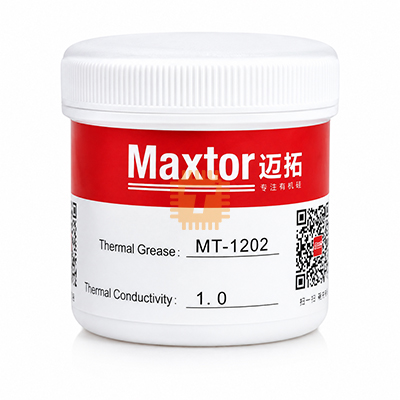
| Name | Maxtor MT-1202 Heat-sink Compound Thermal Paste Grease |
| Code | TA0074 |
| Price | Rs.470.00 |
| In Stock | Yes |
| Package | ACC |
Product Details
The Maxtor MT-1202 Heat-sink Compound Thermal Paste Grease is an industrial-grade thermal interface material (TIM) engineered to bridge microscopic air gaps between heat-generating electronic components and heatsinks, cold plates, or metal chassis enclosures. Formulated with high-purity thermally conductive ceramic metal-oxide fillers suspended in a stable high-temperature synthetic silicone fluid, it provides reliable heat transfer, low thermal contact resistance, and dielectric insulation. Because it is a non-curing, non-drying compound, it maintains a stable paste consistency across an operating temperature range of -40°C to +200°C without cracking, running, or drying out, making it suitable for high-power LED arrays, power supply semiconductor modules, CPU/GPU cooling, and automotive electronics.
Specifications
- Brand / Model: Maxtor MT-1202 (Industrial Thermal Grease Series)
- Chemical Base: High-Temperature Synthetic Silicone Fluid with Thermally Conductive Oxide Fillers
- Appearance / Color: Brilliant White Homogeneous Paste
- Curing State: Non-Curing / Non-Drying (Maintains elastic paste state over service lifetime)
- Thermal Conductivity (k): 1.0 ± 0.2 W/m·K
- Specific Gravity / Density: 1.6 ± 0.08 g/cm³ (at 25°C)
- Cone Penetration: 420 ± 10 (1/10 mm at 25°C)
- Dielectric Breakdown Voltage: > 5.0 kV/mm
- Electrical Conductivity: Electrically Non-Conductive / Dielectric Insulator
- Volatile Loss / Evaporation Rate (Vdaf): < 1>
- Operating Temperature Range: -40°C to +200°C
- Peak / Limit Temperature Tolerance: -50°C to +250°C (Short-term thermal excursion)
- Bleed / Oil Separation: ≤ 1.5% (at 150°C for 24 Hours)
- Environmental Compliance: RoHS Compliant, Non-Corrosive, Non-Toxic
Features
- Non-Curing & Non-Drying Formula: Never hardens, bakes, or flakes, allowing easy component removal, re-application, and field servicing without scraping hard residue.
- High Dielectric Breakdown Strength (>5.0 kV/mm): High electrical insulation properties eliminate the risk of short-circuits when applied around exposed PCB traces, solder pins, and component leads.
- Low Thermal Interface Resistance: Displaces insulating micro air pockets between mating metal surfaces to establish an uninterrupted heat conduction path.
- Broad Temperature Stability (-40°C to +200°C): Retains optimal viscosity and thermal dissipation efficiency under continuous high-temperature loads and extreme thermal cycling.
- Surface Wetting Capability: Spreads uniformly under heatsink clamp pressure to cover large surface areas like LED aluminum PCBs and multi-pin power semiconductor tabs.
Common Applications
- High-Power LED Modules: Interfacing aluminum metal-core PCBs (MCPCB) of COB and SMD high-power LED fixtures to external extruded aluminum heatsinks.
- Power Electronics & SMPS: Mounting TO-220, TO-247, and TO-3 power MOSFETs, IGBTs, bridge rectifiers, and voltage regulators onto heatsink fins.
- Audio Amplifiers & Inverters: Heat dissipation for high-power audio output transistors, DC-AC solar inverters, and motor drive controllers.
- Computing & Embedded Systems: Thermal interface for desktop CPUs, GPU chipsets, Northbridge/Southbridge chips, and single-board computers (Raspberry Pi, industrial SBCs).
- Automotive & Industrial Equipment: Sensor modules, thermistors, automotive ECUs, and industrial process control units requiring thermal stability.
Usage Tips
- Surface Preparation (MANDATORY): Thoroughly clean both mating surfaces (the component package and the heatsink base) using Isopropyl Alcohol (IPA ≥ 99%) and a lint-free cloth. Ensure surfaces are free from dust, manufacturing oils, and old thermal paste residues before applying new grease.
- Application Thickness Guideline ("The Thinner, The Better"):
- Thermal paste has lower thermal conductivity than direct copper or aluminum contact; its only function is to fill microscopic air voids.
- Apply only a thin, uniform film using a plastic spatula, spreader card, or flat applicator. Applying an excessively thick layer acts as a thermal insulator and will reduce cooling efficiency.
- Mechanical Clamping: Always secure the heatsink using adequate, balanced spring clamp or screw tension. Proper mounting pressure forces excess grease out to the edges and minimizes thermal layer thickness.
- Silicone Oil Separation: During long-term storage, a small layer of clear silicone oil may naturally separate on the top surface. This is normal; simply stir and mix the paste thoroughly before application.
- Storage Recommendations: Store the container tightly sealed in a cool, dry area away from direct sunlight and heat sources to ensure long shelf life.
Sharing is caring, show love and share the product with your friends.
Featured


Add to Cart

Other Products
Add to Cart