
RC522 13.56Mhz RFID Module Kit for Arduino (MD0009) Products
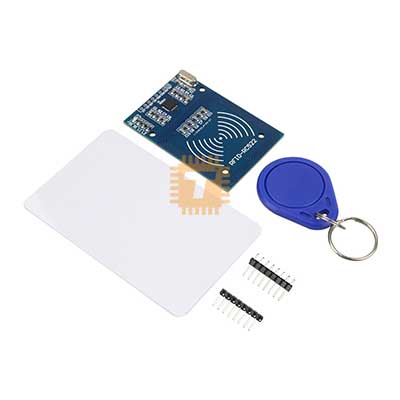
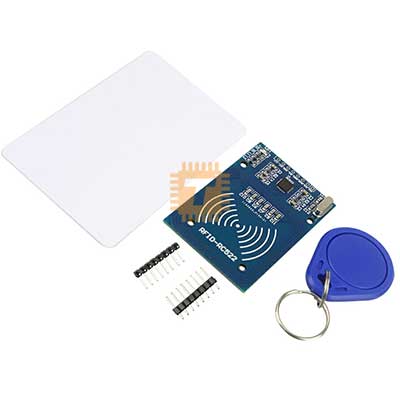
| Name | RC522 13.56Mhz RFID Module Kit for Arduino |
| Code | MD0009 |
| Price | Rs.270.00 |
| In Stock | Yes |
| Package | MODULE |
Product Details
The RC522 RFID Kit is a highly integrated reader/writer module designed for contactless communication at 13.56MHz. Based on the MFRC522 chip, this module is a staple for Arduino and AVR projects, enabling the creation of smart locks, attendance systems, and inventory trackers. It is valued for its low cost, compact size, and robust library support.
Specifications
- Operating Voltage: 3.3V DC (Note: 5V power or logic can damage the chip)
- Operating Current: 13–26mA
- Frequency: 13.56MHz
- Read Range: Approx. 0–30mm (Depending on tag and antenna quality)
- Communication Interface: SPI (Serial Peripheral Interface)
- Data Transfer Rate: Max 10Mbps
- Supported Card Types: Mifare1 S50, S70, Mifare Ultralight, Mifare Pro, Mifare Desfire
Features
- Encryption Support: Supports the CRYPTO1 high-speed encryption algorithm for secure data exchange with Mifare products.
- Ready-to-Use Kit: Typically includes the RC522 module, a standard S50 "credit card" tag, and a keychain fob tag to get projects started immediately.
- Low Power Design: Features an idle current of 10–13mA and a deep sleep current of less than 80uA, making it suitable for battery-operated devices.
- Flexible Integration: Easily interfaces with various microcontrollers including Arduino, Raspberry Pi, ESP8266, and PIC via standard SPI pins.
- Onboard Antenna: Features a high-quality PCB-trace antenna designed to pick up passive tags without external wiring.
Pin Configuration
- VCC: 3.3V Power (Do not use 5V).
- RST: Reset pin.
- GND: Ground.
- MISO: Master In Slave Out (SPI Data).
- MOSI: Master Out Slave In (SPI Data).
- SCK: Serial Clock (SPI).
- SDA (SS): Signal select / Chip select.
- IRQ: Interrupt Request (Optional).
Common Applications
- Contactless Access Control: Building smart door locks that unlock with a card or fob.
- Time & Attendance: Tracking employee or student entry/exit times.
- E-Payment Systems: Simulating small-scale digital wallets or vending credits.
- Inventory Management: Scanning tagged items as they pass through a checkpoint.
Usage Tips
- Logic Level Protection: While the module is powered by 3.3V, many Arduino boards operate at 5V. It is safer to use a logic level shifter on the SPI lines to ensure long-term stability.
- Antenna Sensitivity: Metals interfere with RF signals. Avoid mounting the module directly onto metal surfaces or inside metal enclosures, as this will significantly reduce the read range.
- Library Installation: For Arduino users, the "MFRC522" library by Miguel Balboa is the industry standard and provides numerous examples for reading UIDs and writing data to card sectors.
- Unique ID (UID): Every Mifare tag has a factory-set 4 or 7-byte UID. Most basic access control projects use this UID as the "key" to grant access.
Reference video: YouTube
Sharing is caring, show love and share the product with your friends.
Featured


Add to Cart

Add to Cart
Other Products

Add to Cart

