Solder Pot ZTX-11A 150W Adjustable Temperature Approx. 100-550C (TA1892) Products
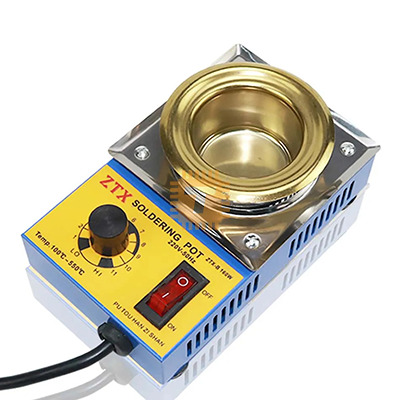
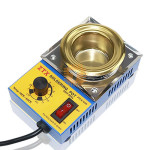
| Name | Solder Pot ZTX-11A 150W Adjustable Temperature Approx. 100-550C |
| Code | TA1892 |
| Price | Rs.2,400.00 |
| In Stock | Yes |
Product Details
The Solder Pot ZTX-11A 150W Adjustable Temperature Approx. 100-550C is a compact, benchtop molten solder bath engineered for rapid component lead tinning, wire harness preparation, transformer coil de-enameling, and small-scale batch soldering operations. Driven by a high-efficiency 150W ceramic heating core, it delivers rapid thermal ramp-up and consistent heat replenishment to maintain a molten solder reservoir across an adjustable temperature range of approximately 100°C to 550°C. Constructed with a deep-drawn, corrosion-resistant titanium alloy / stainless steel crucible, it withstands both traditional leaded (Sn60/Pb40) and high-temperature lead-free (RoHS) alloys without erosion or contamination of the solder melt, making it an essential bench tool for electronics manufacturing lines, motor repair shops, and wire assembly workshops.
Specifications
- Model: ZTX-11A
- Input Operating Voltage: 220V–240V AC, 50/60 Hz
- Rated Heating Power: 150 W
- Temperature Regulation Range: Approx. 100°C to 550°C (Adjustable via analog control dial)
- Crucible / Pot Diameter: Approx. 38 mm to 50 mm (Diameter)
- Crucible Depth: Approx. 35 mm to 40 mm
- Molten Solder Capacity: Approx. 250 g to 500 g of solder alloy
- Melting Time / Warm-Up Rate: Approx. 3 to 8 minutes (From ambient to operating liquidus temperature)
- Crucible Material: High-Durability Titanium Alloy / Treated Stainless Steel (Corrosion and oxidation resistant)
- Heating Element Type: High-Grade Mica-Insulated Ceramic Heating Core
- Temperature Control Method: Stepless Analog Potentiometer Dial with Power Status Indicator
- Enclosure Material: Heavy-Gauge Stamped Sheet Metal with Heat-Resistant Protective Coating
- Base Configuration: Wide Low-Center-of-Gravity Stanchion Base with Anti-Skid Rubber Feet
- Mains Power Cord: Grounded 3-Prong Power Cable (Compliant with safety earthing standards)
- Operating Ambient Temperature: 0°C to +40°C
- Net Weight: Approx. 450 g to 600 g (Unfilled unit)
Features
- Wide 100°C–550°C Temperature Range: Accommodates low-melting-point tin-lead alloys as well as high-temperature lead-free soldering and thermal wire-stripping/enameled wire burn-off.
- Corrosion-Resistant Titanium Alloy Pot: Extends crucible operating life by preventing the chemical leaching and pitting caused by modern aggressive lead-free fluxes and active tin baths.
- Rapid Thermal Recovery: The 150W heating element maintains bath temperature during continuous wire dipping cycles, preventing cold joints or localized freezing.
- Low Center of Gravity & Stable Base: Broad metal chassis resists accidental tipping or shifting during production dips, reducing workshop burn hazards.
- Stepless Temperature Dial: Rotary knob allows precise thermal adjustment to match specific alloy liquidus points and dip-cycle durations.
Common Applications
- Wire & Cable Harness Assembly: Batch-tinning stripped stranded wire ends before crimping or terminal block insertion.
- Magnet Wire Stripping & Tinning: Burning off enamel/polyurethane coatings while tinning transformer leads, motor coils, and inductor terminations in a single dip.
- Through-Hole Component Pre-Tinning: Pre-coating oxidized axial/radial resistor, diode, and capacitor leads prior to PCB assembly.
- Desoldering Multi-Pin Components: Heating all pins simultaneously on heavy-pin connectors and relays for effortless component extraction from salvage boards.
- Solder Alloy Re-Melting & Salvage: Melting down solder waste and lead-tin scrap into reusable ingot bars or pure liquid solder pools.
Usage Tips
- First-Time Burn-In & Crucible Tinning (CRITICAL):
- **Step 1:** Place solder bars or chopped solder wire into the cold pot until it is at least half full before powering on. **Never heat an empty crucible**, as dry heating causes severe oxidation and shortens heating element life.
- **Step 2:** Turn the dial to ~300°C. As the solder melts, fill the pot until the pool is approximately 5 mm below the top rim.
- **Step 3:** Coat the inner walls of the crucible with a thin layer of molten solder and flux to season the surface against atmospheric oxidation.
- Optimal Temperature Management:
- For standard 60/40 leaded solder (liquidus 190°C), operate the bath at **250°C to 280°C**.
- For SAC305 / lead-free alloys (liquidus ~217°C), set the bath to **280°C to 320°C**.
- Reserve high temperatures (>400°C) strictly for burning off polyurethane enamel from copper magnet wires. Leaving the pot above 400°C during normal tinning accelerates dross formation and degrades alloy purity.
- Dross Removal Protocol: Molten solder exposed to open air oxidizes continuously, forming an oxide skin (dross). **Use a wooden spatula, stainless scraper, or ceramic skimmer** to push the surface dross aside before dipping wires. Do not use plastic, aluminum, or galvanized tools that can melt or contaminate the bath.
- Flux Application Sequence: Dip stripped wire ends into external liquid rosin flux first, then immerse the leads into the molten pot for 1 to 2 seconds. Withdrawing slowly ensures a smooth, shiny, and uniform tin coat.
- Electrical Grounding & Fume Extraction: Always connect the device to an earthed mains socket to dissipate electrostatic charges and prevent electrical shock. Operate the solder pot beneath a dedicated **benchtop fume extractor or inside a ventilated fume hood** to capture vaporized flux and aerosolized particles.
Sharing is caring, show love and share the product with your friends.
Featured

Add to Cart


Add to Cart

Other Products
Add to Cart