
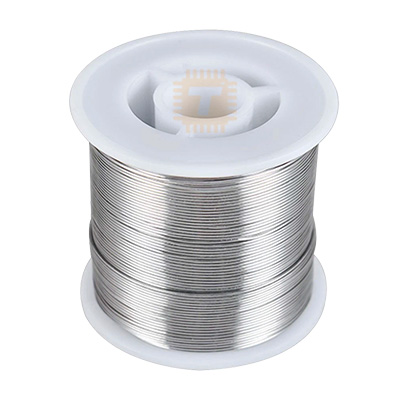
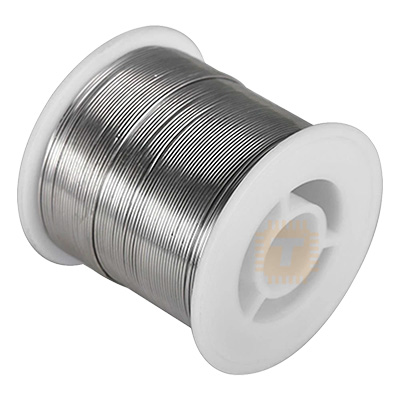
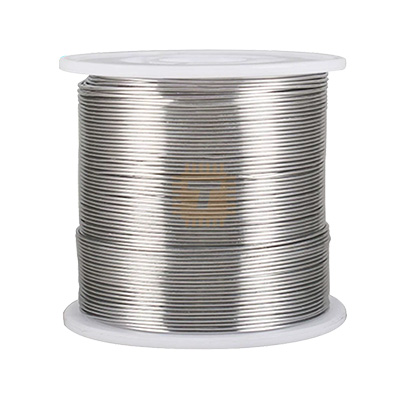
Solder Wire Lead Roll 60/40 0.6mm 50g High Quality (Made in India) (TA1891) Products
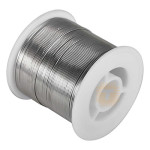
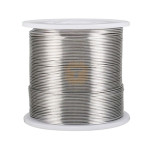
| Name | Solder Wire Lead Roll 60/40 0.6mm 50g High Quality (Made in India) |
| Code | TA1891 |
| Price | Rs.850.00 |
| In Stock | Yes |
| Package | SOLDER |
Product Details
The Solder Wire Lead Roll 60/40 0.6mm 50g High Quality (Made in India) is a precision-grade tin-lead alloy soldering wire engineered for fine-pitch surface-mount (SMD/SMT) assembly, delicate through-hole soldering, PCB rework, and micro-electronics repair. Formulated with an optimal 60% Tin (Sn) and 40% Lead (Pb) metallurgical ratio, it delivers a low melting temperature range of 183°C to 190°C, high wettability, and smooth capillary flow across copper, brass, and nickel surfaces. Featuring a continuous, non-corrosive multi-core rosin flux channel centered along its fine 0.6mm gauge, it breaks through surface oxidation instantly to form bright, concave, mechanically robust solder fillets without requiring separate liquid flux application.
Specifications
- Alloy Composition: 60% Tin (Sn) / 40% Lead (Pb)
- Wire Diameter Gauge: 0.6 mm (Approx. 0.024 Inches / Ideal for fine-pitch soldering)
- Net Alloy Weight: 50 g (Excluding spool tare weight)
- Country of Origin: Made in India (Manufactured to high-purity metallurgical standards)
- Melting Temperature Range:
- Solidus: 183°C (361°F)
- Liquidus: 190°C (374°F)
- Plastic State Transition: ~7°C (Near-eutectic short pasty range for rapid solidification)
- Flux Core Type: High-Grade Activated Rosin Core (RA / RMA Type, Non-Corrosive)
- Flux Content / Percentage: 1.8% to 2.2% Core by Weight
- Flux Halide Content: < 0>
- Solder Joint Appearance: Bright, Shiny, and Smooth Concave Fillet (Classic leaded finish)
- Residue Characteristics: Transparent, Non-Conductive, and Non-Corrosive Rosin Residue
- Spool Material: High-Impact Rigid Plastic Reel with Smooth De-Reeling Flange
- Spool Dimensions: Approx. 45 mm Flange Diameter × 28 mm Height (Central arbor bore: 15 mm)
- Gross Weight: Approx. 65 g to 75 g (Wire and spool combined)
Features
- Fine 0.6mm Diameter for Micro-Soldering: Allows precise solder volume delivery on 0805/0603 SMD chip components, fine-pitch QFP/SOIC IC pins, and miniature drone/RC flight controllers without bridging adjacent pads.
- Fast Wetting & Capillary Action: High-purity tin-lead alloy combined with active rosin flux cores provides rapid thermal wetting, coating copper pads and component leads in under 1 to 2 seconds.
- Near-Eutectic Freezing Characteristics: A narrow 7°C pasty range allows the joint to solidify almost immediately after iron withdrawal, minimizing cold/disturbed solder joints caused by accidental component vibration during cooling.
- Non-Corrosive Rosin Residue: Post-soldering residue dries clear and inert with high surface insulation resistance (SIR), eliminating the risk of electrical leakage or long-term copper trace corrosion if left uncleaned on standard circuits.
- Low Spatter Formulation: Formulated to minimize flux popping and micro-solder balls during rapid heating, keeping nearby SMD traces clean and reducing manual post-cleaning time.
Common Applications
- Fine-Pitch SMD & SMT Assembly: Soldering and reworking discrete surface-mount resistors, capacitors, diodes, and fine-leg integrated circuit packages (SOIC, SSOP, TQFP).
- Precision PCB Prototyping & Rework: Building DIY electronics projects on perfboards, Vero boards, and breadboard breakout modules requiring tight component spacing.
- Mobile Phone & Console Repair: Micro-jump wire soldering, replacement of miniature micro-USB/USB-C charging ports, flex cable jumpers, and battery terminal contacts.
- Robotics & Drone Electronics: Wiring multirotor ESCs, 28 AWG to 32 AWG signal leads, flight controller pin headers, and micro FPV camera harnesses.
- Audio & Instrument Repair: Assembling low-noise guitar pickup wiring, audio patch cables, miniature toggle switches, and discrete headphone jacks.
Usage Tips
- Iron Temperature Setting (CRITICAL):
- With a liquidus melting point of 190°C, the recommended soldering iron tip temperature is **300°C to 340°C (572°F to 644°F)**.
- Avoid running the soldering iron above 370°C for this fine 0.6mm leaded wire; excessive heat burns off the small rosin core prematurely before it can deoxidize the pad, resulting in dull, oxidized joints.
- Proper Feeding Technique: Heat the joint (touching both the component lead and the copper pad simultaneously with the tinned iron tip) for 1 to 1.5 seconds, then **feed the 0.6mm wire directly into the heated joint—not directly against the iron tip**. Once a shiny concave fillet forms, withdraw the wire first, followed immediately by the iron.
- Flux Residue Removal (Optional): While the RMA rosin residue is non-conductive, for high-frequency RF circuits, high-impedance analog paths, or professional aesthetic presentation, clean the board using a stiff ESD brush dipped in **Isopropyl Alcohol (IPA ≥ 99%)**.
- Health & Safety Precautions:
- Contains elemental lead (Pb). **Always wash hands thoroughly with soap and water after handling solder wire**, especially before eating or drinking.
- Work in a well-ventilated area or use a dedicated benchtop **solder fume extractor** to prevent inhaling rosin flux fumes, which can cause respiratory irritation.
- Storage Recommendations: Keep the spool stored in a dry, low-humidity environment inside its protective plastic sleeve to prevent surface tarnish and oxidation of the outer tin-lead layer over time.
The High-Quality 60/40 Rosin-Core Solder Wire Roll (0.6mm Diameter / 50g Spool / Made in India) is a precision-grade tin-lead alloy soldering wire engineered for fine-pitch surface-mount (SMD/SMT) assembly, delicate through-hole soldering, PCB rework, and micro-electronics repair. Formulated with an optimal 60% Tin (Sn) and 40% Lead (Pb) metallurgical ratio, it delivers a low melting temperature range of 183°C to 190°C, high wettability, and smooth capillary flow across copper, brass, and nickel surfaces. Featuring a continuous, non-corrosive multi-core rosin flux channel centered along its fine 0.6mm gauge, it breaks through surface oxidation instantly to form bright, concave, mechanically robust solder fillets without requiring separate liquid flux application.
Specifications
- Alloy Composition: 60% Tin (Sn) / 40% Lead (Pb)
- Wire Diameter Gauge: 0.6 mm (Approx. 0.024 Inches / Ideal for fine-pitch soldering)
- Net Alloy Weight: 50 g (Excluding spool tare weight)
- Country of Origin: Made in India (Manufactured to high-purity metallurgical standards)
- Melting Temperature Range:
- Solidus: 183°C (361°F)
- Liquidus: 190°C (374°F)
- Plastic State Transition: ~7°C (Near-eutectic short pasty range for rapid solidification)
- Flux Core Type: High-Grade Activated Rosin Core (RA / RMA Type, Non-Corrosive)
- Flux Content / Percentage: 1.8% to 2.2% Core by Weight
- Flux Halide Content: < 0>
- Solder Joint Appearance: Bright, Shiny, and Smooth Concave Fillet (Classic leaded finish)
- Residue Characteristics: Transparent, Non-Conductive, and Non-Corrosive Rosin Residue
- Spool Material: High-Impact Rigid Plastic Reel with Smooth De-Reeling Flange
- Spool Dimensions: Approx. 45 mm Flange Diameter × 28 mm Height (Central arbor bore: 15 mm)
- Gross Weight: Approx. 65 g to 75 g (Wire and spool combined)
Features
- Fine 0.6mm Diameter for Micro-Soldering: Allows precise solder volume delivery on 0805/0603 SMD chip components, fine-pitch QFP/SOIC IC pins, and miniature drone/RC flight controllers without bridging adjacent pads.
- Fast Wetting & Capillary Action: High-purity tin-lead alloy combined with active rosin flux cores provides rapid thermal wetting, coating copper pads and component leads in under 1 to 2 seconds.
- Near-Eutectic Freezing Characteristics: A narrow 7°C pasty range allows the joint to solidify almost immediately after iron withdrawal, minimizing cold/disturbed solder joints caused by accidental component vibration during cooling.
- Non-Corrosive Rosin Residue: Post-soldering residue dries clear and inert with high surface insulation resistance (SIR), eliminating the risk of electrical leakage or long-term copper trace corrosion if left uncleaned on standard circuits.
- Low Spatter Formulation: Formulated to minimize flux popping and micro-solder balls during rapid heating, keeping nearby SMD traces clean and reducing manual post-cleaning time.
Common Applications
- Fine-Pitch SMD & SMT Assembly: Soldering and reworking discrete surface-mount resistors, capacitors, diodes, and fine-leg integrated circuit packages (SOIC, SSOP, TQFP).
- Precision PCB Prototyping & Rework: Building DIY electronics projects on perfboards, Vero boards, and breadboard breakout modules requiring tight component spacing.
- Mobile Phone & Console Repair: Micro-jump wire soldering, replacement of miniature micro-USB/USB-C charging ports, flex cable jumpers, and battery terminal contacts.
- Robotics & Drone Electronics: Wiring multirotor ESCs, 28 AWG to 32 AWG signal leads, flight controller pin headers, and micro FPV camera harnesses.
- Audio & Instrument Repair: Assembling low-noise guitar pickup wiring, audio patch cables, miniature toggle switches, and discrete headphone jacks.
Usage Tips
- Iron Temperature Setting (CRITICAL):
- With a liquidus melting point of 190°C, the recommended soldering iron tip temperature is **300°C to 340°C (572°F to 644°F)**.
- Avoid running the soldering iron above 370°C for this fine 0.6mm leaded wire; excessive heat burns off the small rosin core prematurely before it can deoxidize the pad, resulting in dull, oxidized joints.
- Proper Feeding Technique: Heat the joint (touching both the component lead and the copper pad simultaneously with the tinned iron tip) for 1 to 1.5 seconds, then **feed the 0.6mm wire directly into the heated joint—not directly against the iron tip**. Once a shiny concave fillet forms, withdraw the wire first, followed immediately by the iron.
- Flux Residue Removal (Optional): While the RMA rosin residue is non-conductive, for high-frequency RF circuits, high-impedance analog paths, or professional aesthetic presentation, clean the board using a stiff ESD brush dipped in **Isopropyl Alcohol (IPA ≥ 99%)**.
- Health & Safety Precautions:
- Contains elemental lead (Pb). **Always wash hands thoroughly with soap and water after handling solder wire**, especially before eating or drinking.
- Work in a well-ventilated area or use a dedicated benchtop **solder fume extractor** to prevent inhaling rosin flux fumes, which can cause respiratory irritation.
- Storage Recommendations: Keep the spool stored in a dry, low-humidity environment inside its protective plastic sleeve to prevent surface tarnish and oxidation of the outer tin-lead layer over time.
The High-Quality 60/40 Rosin-Core Solder Wire Roll (0.6mm Diameter / 50g Spool / Made in India) is a precision-grade tin-lead alloy soldering wire engineered for fine-pitch surface-mount (SMD/SMT) assembly, delicate through-hole soldering, PCB rework, and micro-electronics repair. Formulated with an optimal 60% Tin (Sn) and 40% Lead (Pb) metallurgical ratio, it delivers a low melting temperature range of 183°C to 190°C, high wettability, and smooth capillary flow across copper, brass, and nickel surfaces. Featuring a continuous, non-corrosive multi-core rosin flux channel centered along its fine 0.6mm gauge, it breaks through surface oxidation instantly to form bright, concave, mechanically robust solder fillets without requiring separate liquid flux application.
Specifications
- Alloy Composition: 60% Tin (Sn) / 40% Lead (Pb)
- Wire Diameter Gauge: 0.6 mm (Approx. 0.024 Inches / Ideal for fine-pitch soldering)
- Net Alloy Weight: 50 g (Excluding spool tare weight)
- Country of Origin: Made in India (Manufactured to high-purity metallurgical standards)
- Melting Temperature Range:
- Solidus: 183°C (361°F)
- Liquidus: 190°C (374°F)
- Plastic State Transition: ~7°C (Near-eutectic short pasty range for rapid solidification)
- Flux Core Type: High-Grade Activated Rosin Core (RA / RMA Type, Non-Corrosive)
- Flux Content / Percentage: 1.8% to 2.2% Core by Weight
- Flux Halide Content: < 0>
- Solder Joint Appearance: Bright, Shiny, and Smooth Concave Fillet (Classic leaded finish)
- Residue Characteristics: Transparent, Non-Conductive, and Non-Corrosive Rosin Residue
- Spool Material: High-Impact Rigid Plastic Reel with Smooth De-Reeling Flange
- Spool Dimensions: Approx. 45 mm Flange Diameter × 28 mm Height (Central arbor bore: 15 mm)
- Gross Weight: Approx. 65 g to 75 g (Wire and spool combined)
Features
- Fine 0.6mm Diameter for Micro-Soldering: Allows precise solder volume delivery on 0805/0603 SMD chip components, fine-pitch QFP/SOIC IC pins, and miniature drone/RC flight controllers without bridging adjacent pads.
- Fast Wetting & Capillary Action: High-purity tin-lead alloy combined with active rosin flux cores provides rapid thermal wetting, coating copper pads and component leads in under 1 to 2 seconds.
- Near-Eutectic Freezing Characteristics: A narrow 7°C pasty range allows the joint to solidify almost immediately after iron withdrawal, minimizing cold/disturbed solder joints caused by accidental component vibration during cooling.
- Non-Corrosive Rosin Residue: Post-soldering residue dries clear and inert with high surface insulation resistance (SIR), eliminating the risk of electrical leakage or long-term copper trace corrosion if left uncleaned on standard circuits.
- Low Spatter Formulation: Formulated to minimize flux popping and micro-solder balls during rapid heating, keeping nearby SMD traces clean and reducing manual post-cleaning time.
Common Applications
- Fine-Pitch SMD & SMT Assembly: Soldering and reworking discrete surface-mount resistors, capacitors, diodes, and fine-leg integrated circuit packages (SOIC, SSOP, TQFP).
- Precision PCB Prototyping & Rework: Building DIY electronics projects on perfboards, Vero boards, and breadboard breakout modules requiring tight component spacing.
- Mobile Phone & Console Repair: Micro-jump wire soldering, replacement of miniature micro-USB/USB-C charging ports, flex cable jumpers, and battery terminal contacts.
- Robotics & Drone Electronics: Wiring multirotor ESCs, 28 AWG to 32 AWG signal leads, flight controller pin headers, and micro FPV camera harnesses.
- Audio & Instrument Repair: Assembling low-noise guitar pickup wiring, audio patch cables, miniature toggle switches, and discrete headphone jacks.
Usage Tips
- Iron Temperature Setting (CRITICAL):
- With a liquidus melting point of 190°C, the recommended soldering iron tip temperature is **300°C to 340°C (572°F to 644°F)**.
- Avoid running the soldering iron above 370°C for this fine 0.6mm leaded wire; excessive heat burns off the small rosin core prematurely before it can deoxidize the pad, resulting in dull, oxidized joints.
- Proper Feeding Technique: Heat the joint (touching both the component lead and the copper pad simultaneously with the tinned iron tip) for 1 to 1.5 seconds, then **feed the 0.6mm wire directly into the heated joint—not directly against the iron tip**. Once a shiny concave fillet forms, withdraw the wire first, followed immediately by the iron.
- Flux Residue Removal (Optional): While the RMA rosin residue is non-conductive, for high-frequency RF circuits, high-impedance analog paths, or professional aesthetic presentation, clean the board using a stiff ESD brush dipped in **Isopropyl Alcohol (IPA ≥ 99%)**.
- Health & Safety Precautions:
- Contains elemental lead (Pb). **Always wash hands thoroughly with soap and water after handling solder wire**, especially before eating or drinking.
- Work in a well-ventilated area or use a dedicated benchtop **solder fume extractor** to prevent inhaling rosin flux fumes, which can cause respiratory irritation.
- Storage Recommendations: Keep the spool stored in a dry, low-humidity environment inside its protective plastic sleeve to prevent surface tarnish and oxidation of the outer tin-lead layer over time.
The High-Quality 60/40 Rosin-Core Solder Wire Roll (0.6mm Diameter / 50g Spool / Made in India) is a precision-grade tin-lead alloy soldering wire engineered for fine-pitch surface-mount (SMD/SMT) assembly, delicate through-hole soldering, PCB rework, and micro-electronics repair. Formulated with an optimal 60% Tin (Sn) and 40% Lead (Pb) metallurgical ratio, it delivers a low melting temperature range of 183°C to 190°C, high wettability, and smooth capillary flow across copper, brass, and nickel surfaces. Featuring a continuous, non-corrosive multi-core rosin flux channel centered along its fine 0.6mm gauge, it breaks through surface oxidation instantly to form bright, concave, mechanically robust solder fillets without requiring separate liquid flux application.
Specifications
- Alloy Composition: 60% Tin (Sn) / 40% Lead (Pb)
- Wire Diameter Gauge: 0.6 mm (Approx. 0.024 Inches / Ideal for fine-pitch soldering)
- Net Alloy Weight: 50 g (Excluding spool tare weight)
- Country of Origin: Made in India (Manufactured to high-purity metallurgical standards)
- Melting Temperature Range:
- Solidus: 183°C (361°F)
- Liquidus: 190°C (374°F)
- Plastic State Transition: ~7°C (Near-eutectic short pasty range for rapid solidification)
- Flux Core Type: High-Grade Activated Rosin Core (RA / RMA Type, Non-Corrosive)
- Flux Content / Percentage: 1.8% to 2.2% Core by Weight
- Flux Halide Content: < 0>
- Solder Joint Appearance: Bright, Shiny, and Smooth Concave Fillet (Classic leaded finish)
- Residue Characteristics: Transparent, Non-Conductive, and Non-Corrosive Rosin Residue
- Spool Material: High-Impact Rigid Plastic Reel with Smooth De-Reeling Flange
- Spool Dimensions: Approx. 45 mm Flange Diameter × 28 mm Height (Central arbor bore: 15 mm)
- Gross Weight: Approx. 65 g to 75 g (Wire and spool combined)
Features
- Fine 0.6mm Diameter for Micro-Soldering: Allows precise solder volume delivery on 0805/0603 SMD chip components, fine-pitch QFP/SOIC IC pins, and miniature drone/RC flight controllers without bridging adjacent pads.
- Fast Wetting & Capillary Action: High-purity tin-lead alloy combined with active rosin flux cores provides rapid thermal wetting, coating copper pads and component leads in under 1 to 2 seconds.
- Near-Eutectic Freezing Characteristics: A narrow 7°C pasty range allows the joint to solidify almost immediately after iron withdrawal, minimizing cold/disturbed solder joints caused by accidental component vibration during cooling.
- Non-Corrosive Rosin Residue: Post-soldering residue dries clear and inert with high surface insulation resistance (SIR), eliminating the risk of electrical leakage or long-term copper trace corrosion if left uncleaned on standard circuits.
- Low Spatter Formulation: Formulated to minimize flux popping and micro-solder balls during rapid heating, keeping nearby SMD traces clean and reducing manual post-cleaning time.
Common Applications
- Fine-Pitch SMD & SMT Assembly: Soldering and reworking discrete surface-mount resistors, capacitors, diodes, and fine-leg integrated circuit packages (SOIC, SSOP, TQFP).
- Precision PCB Prototyping & Rework: Building DIY electronics projects on perfboards, Vero boards, and breadboard breakout modules requiring tight component spacing.
- Mobile Phone & Console Repair: Micro-jump wire soldering, replacement of miniature micro-USB/USB-C charging ports, flex cable jumpers, and battery terminal contacts.
- Robotics & Drone Electronics: Wiring multirotor ESCs, 28 AWG to 32 AWG signal leads, flight controller pin headers, and micro FPV camera harnesses.
- Audio & Instrument Repair: Assembling low-noise guitar pickup wiring, audio patch cables, miniature toggle switches, and discrete headphone jacks.
Usage Tips
- Iron Temperature Setting (CRITICAL):
- With a liquidus melting point of 190°C, the recommended soldering iron tip temperature is **300°C to 340°C (572°F to 644°F)**.
- Avoid running the soldering iron above 370°C for this fine 0.6mm leaded wire; excessive heat burns off the small rosin core prematurely before it can deoxidize the pad, resulting in dull, oxidized joints.
- Proper Feeding Technique: Heat the joint (touching both the component lead and the copper pad simultaneously with the tinned iron tip) for 1 to 1.5 seconds, then **feed the 0.6mm wire directly into the heated joint—not directly against the iron tip**. Once a shiny concave fillet forms, withdraw the wire first, followed immediately by the iron.
- Flux Residue Removal (Optional): While the RMA rosin residue is non-conductive, for high-frequency RF circuits, high-impedance analog paths, or professional aesthetic presentation, clean the board using a stiff ESD brush dipped in **Isopropyl Alcohol (IPA ≥ 99%)**.
- Health & Safety Precautions:
- Contains elemental lead (Pb). **Always wash hands thoroughly with soap and water after handling solder wire**, especially before eating or drinking.
- Work in a well-ventilated area or use a dedicated benchtop **solder fume extractor** to prevent inhaling rosin flux fumes, which can cause respiratory irritation.
- Storage Recommendations: Keep the spool stored in a dry, low-humidity environment inside its protective plastic sleeve to prevent surface tarnish and oxidation of the outer tin-lead layer over time.
The High-Quality 60/40 Rosin-Core Solder Wire Roll (0.6mm Diameter / 50g Spool / Made in India) is a precision-grade tin-lead alloy soldering wire engineered for fine-pitch surface-mount (SMD/SMT) assembly, delicate through-hole soldering, PCB rework, and micro-electronics repair. Formulated with an optimal 60% Tin (Sn) and 40% Lead (Pb) metallurgical ratio, it delivers a low melting temperature range of 183°C to 190°C, high wettability, and smooth capillary flow across copper, brass, and nickel surfaces. Featuring a continuous, non-corrosive multi-core rosin flux channel centered along its fine 0.6mm gauge, it breaks through surface oxidation instantly to form bright, concave, mechanically robust solder fillets without requiring separate liquid flux application.
Specifications
- Alloy Composition: 60% Tin (Sn) / 40% Lead (Pb)
- Wire Diameter Gauge: 0.6 mm (Approx. 0.024 Inches / Ideal for fine-pitch soldering)
- Net Alloy Weight: 50 g (Excluding spool tare weight)
- Country of Origin: Made in India (Manufactured to high-purity metallurgical standards)
- Melting Temperature Range:
- Solidus: 183°C (361°F)
- Liquidus: 190°C (374°F)
- Plastic State Transition: ~7°C (Near-eutectic short pasty range for rapid solidification)
- Flux Core Type: High-Grade Activated Rosin Core (RA / RMA Type, Non-Corrosive)
- Flux Content / Percentage: 1.8% to 2.2% Core by Weight
- Flux Halide Content: < 0>
- Solder Joint Appearance: Bright, Shiny, and Smooth Concave Fillet (Classic leaded finish)
- Residue Characteristics: Transparent, Non-Conductive, and Non-Corrosive Rosin Residue
- Spool Material: High-Impact Rigid Plastic Reel with Smooth De-Reeling Flange
- Spool Dimensions: Approx. 45 mm Flange Diameter × 28 mm Height (Central arbor bore: 15 mm)
- Gross Weight: Approx. 65 g to 75 g (Wire and spool combined)
Features
- Fine 0.6mm Diameter for Micro-Soldering: Allows precise solder volume delivery on 0805/0603 SMD chip components, fine-pitch QFP/SOIC IC pins, and miniature drone/RC flight controllers without bridging adjacent pads.
- Fast Wetting & Capillary Action: High-purity tin-lead alloy combined with active rosin flux cores provides rapid thermal wetting, coating copper pads and component leads in under 1 to 2 seconds.
- Near-Eutectic Freezing Characteristics: A narrow 7°C pasty range allows the joint to solidify almost immediately after iron withdrawal, minimizing cold/disturbed solder joints caused by accidental component vibration during cooling.
- Non-Corrosive Rosin Residue: Post-soldering residue dries clear and inert with high surface insulation resistance (SIR), eliminating the risk of electrical leakage or long-term copper trace corrosion if left uncleaned on standard circuits.
- Low Spatter Formulation: Formulated to minimize flux popping and micro-solder balls during rapid heating, keeping nearby SMD traces clean and reducing manual post-cleaning time.
Common Applications
- Fine-Pitch SMD & SMT Assembly: Soldering and reworking discrete surface-mount resistors, capacitors, diodes, and fine-leg integrated circuit packages (SOIC, SSOP, TQFP).
- Precision PCB Prototyping & Rework: Building DIY electronics projects on perfboards, Vero boards, and breadboard breakout modules requiring tight component spacing.
- Mobile Phone & Console Repair: Micro-jump wire soldering, replacement of miniature micro-USB/USB-C charging ports, flex cable jumpers, and battery terminal contacts.
- Robotics & Drone Electronics: Wiring multirotor ESCs, 28 AWG to 32 AWG signal leads, flight controller pin headers, and micro FPV camera harnesses.
- Audio & Instrument Repair: Assembling low-noise guitar pickup wiring, audio patch cables, miniature toggle switches, and discrete headphone jacks.
Usage Tips
- Iron Temperature Setting (CRITICAL):
- With a liquidus melting point of 190°C, the recommended soldering iron tip temperature is **300°C to 340°C (572°F to 644°F)**.
- Avoid running the soldering iron above 370°C for this fine 0.6mm leaded wire; excessive heat burns off the small rosin core prematurely before it can deoxidize the pad, resulting in dull, oxidized joints.
- Proper Feeding Technique: Heat the joint (touching both the component lead and the copper pad simultaneously with the tinned iron tip) for 1 to 1.5 seconds, then **feed the 0.6mm wire directly into the heated joint—not directly against the iron tip**. Once a shiny concave fillet forms, withdraw the wire first, followed immediately by the iron.
- Flux Residue Removal (Optional): While the RMA rosin residue is non-conductive, for high-frequency RF circuits, high-impedance analog paths, or professional aesthetic presentation, clean the board using a stiff ESD brush dipped in **Isopropyl Alcohol (IPA ≥ 99%)**.
- Health & Safety Precautions:
- Contains elemental lead (Pb). **Always wash hands thoroughly with soap and water after handling solder wire**, especially before eating or drinking.
- Work in a well-ventilated area or use a dedicated benchtop **solder fume extractor** to prevent inhaling rosin flux fumes, which can cause respiratory irritation.
- Storage Recommendations: Keep the spool stored in a dry, low-humidity environment inside its protective plastic sleeve to prevent surface tarnish and oxidation of the outer tin-lead layer over time.
The High-Quality 60/40 Rosin-Core Solder Wire Roll (0.6mm Diameter / 50g Spool / Made in India) is a precision-grade tin-lead alloy soldering wire engineered for fine-pitch surface-mount (SMD/SMT) assembly, delicate through-hole soldering, PCB rework, and micro-electronics repair. Formulated with an optimal 60% Tin (Sn) and 40% Lead (Pb) metallurgical ratio, it delivers a low melting temperature range of 183°C to 190°C, high wettability, and smooth capillary flow across copper, brass, and nickel surfaces. Featuring a continuous, non-corrosive multi-core rosin flux channel centered along its fine 0.6mm gauge, it breaks through surface oxidation instantly to form bright, concave, mechanically robust solder fillets without requiring separate liquid flux application.
Specifications
- Alloy Composition: 60% Tin (Sn) / 40% Lead (Pb)
- Wire Diameter Gauge: 0.6 mm (Approx. 0.024 Inches / Ideal for fine-pitch soldering)
- Net Alloy Weight: 50 g (Excluding spool tare weight)
- Country of Origin: Made in India (Manufactured to high-purity metallurgical standards)
- Melting Temperature Range:
- Solidus: 183°C (361°F)
- Liquidus: 190°C (374°F)
- Plastic State Transition: ~7°C (Near-eutectic short pasty range for rapid solidification)
- Flux Core Type: High-Grade Activated Rosin Core (RA / RMA Type, Non-Corrosive)
- Flux Content / Percentage: 1.8% to 2.2% Core by Weight
- Flux Halide Content: < 0>
- Solder Joint Appearance: Bright, Shiny, and Smooth Concave Fillet (Classic leaded finish)
- Residue Characteristics: Transparent, Non-Conductive, and Non-Corrosive Rosin Residue
- Spool Material: High-Impact Rigid Plastic Reel with Smooth De-Reeling Flange
- Spool Dimensions: Approx. 45 mm Flange Diameter × 28 mm Height (Central arbor bore: 15 mm)
- Gross Weight: Approx. 65 g to 75 g (Wire and spool combined)
Features
- Fine 0.6mm Diameter for Micro-Soldering: Allows precise solder volume delivery on 0805/0603 SMD chip components, fine-pitch QFP/SOIC IC pins, and miniature drone/RC flight controllers without bridging adjacent pads.
- Fast Wetting & Capillary Action: High-purity tin-lead alloy combined with active rosin flux cores provides rapid thermal wetting, coating copper pads and component leads in under 1 to 2 seconds.
- Near-Eutectic Freezing Characteristics: A narrow 7°C pasty range allows the joint to solidify almost immediately after iron withdrawal, minimizing cold/disturbed solder joints caused by accidental component vibration during cooling.
- Non-Corrosive Rosin Residue: Post-soldering residue dries clear and inert with high surface insulation resistance (SIR), eliminating the risk of electrical leakage or long-term copper trace corrosion if left uncleaned on standard circuits.
- Low Spatter Formulation: Formulated to minimize flux popping and micro-solder balls during rapid heating, keeping nearby SMD traces clean and reducing manual post-cleaning time.
Common Applications
- Fine-Pitch SMD & SMT Assembly: Soldering and reworking discrete surface-mount resistors, capacitors, diodes, and fine-leg integrated circuit packages (SOIC, SSOP, TQFP).
- Precision PCB Prototyping & Rework: Building DIY electronics projects on perfboards, Vero boards, and breadboard breakout modules requiring tight component spacing.
- Mobile Phone & Console Repair: Micro-jump wire soldering, replacement of miniature micro-USB/USB-C charging ports, flex cable jumpers, and battery terminal contacts.
- Robotics & Drone Electronics: Wiring multirotor ESCs, 28 AWG to 32 AWG signal leads, flight controller pin headers, and micro FPV camera harnesses.
- Audio & Instrument Repair: Assembling low-noise guitar pickup wiring, audio patch cables, miniature toggle switches, and discrete headphone jacks.
Usage Tips
- Iron Temperature Setting (CRITICAL):
- With a liquidus melting point of 190°C, the recommended soldering iron tip temperature is **300°C to 340°C (572°F to 644°F)**.
- Avoid running the soldering iron above 370°C for this fine 0.6mm leaded wire; excessive heat burns off the small rosin core prematurely before it can deoxidize the pad, resulting in dull, oxidized joints.
- Proper Feeding Technique: Heat the joint (touching both the component lead and the copper pad simultaneously with the tinned iron tip) for 1 to 1.5 seconds, then **feed the 0.6mm wire directly into the heated joint—not directly against the iron tip**. Once a shiny concave fillet forms, withdraw the wire first, followed immediately by the iron.
- Flux Residue Removal (Optional): While the RMA rosin residue is non-conductive, for high-frequency RF circuits, high-impedance analog paths, or professional aesthetic presentation, clean the board using a stiff ESD brush dipped in **Isopropyl Alcohol (IPA ≥ 99%)**.
- Health & Safety Precautions:
- Contains elemental lead (Pb). **Always wash hands thoroughly with soap and water after handling solder wire**, especially before eating or drinking.
- Work in a well-ventilated area or use a dedicated benchtop **solder fume extractor** to prevent inhaling rosin flux fumes, which can cause respiratory irritation.
- Storage Recommendations: Keep the spool stored in a dry, low-humidity environment inside its protective plastic sleeve to prevent surface tarnish and oxidation of the outer tin-lead layer over time.
The High-Quality 60/40 Rosin-Core Solder Wire Roll (0.6mm Diameter / 50g Spool / Made in India) is a precision-grade tin-lead alloy soldering wire engineered for fine-pitch surface-mount (SMD/SMT) assembly, delicate through-hole soldering, PCB rework, and micro-electronics repair. Formulated with an optimal 60% Tin (Sn) and 40% Lead (Pb) metallurgical ratio, it delivers a low melting temperature range of 183°C to 190°C, high wettability, and smooth capillary flow across copper, brass, and nickel surfaces. Featuring a continuous, non-corrosive multi-core rosin flux channel centered along its fine 0.6mm gauge, it breaks through surface oxidation instantly to form bright, concave, mechanically robust solder fillets without requiring separate liquid flux application.
Specifications
- Alloy Composition: 60% Tin (Sn) / 40% Lead (Pb)
- Wire Diameter Gauge: 0.6 mm (Approx. 0.024 Inches / Ideal for fine-pitch soldering)
- Net Alloy Weight: 50 g (Excluding spool tare weight)
- Country of Origin: Made in India (Manufactured to high-purity metallurgical standards)
- Melting Temperature Range:
- Solidus: 183°C (361°F)
- Liquidus: 190°C (374°F)
- Plastic State Transition: ~7°C (Near-eutectic short pasty range for rapid solidification)
- Flux Core Type: High-Grade Activated Rosin Core (RA / RMA Type, Non-Corrosive)
- Flux Content / Percentage: 1.8% to 2.2% Core by Weight
- Flux Halide Content: < 0>
- Solder Joint Appearance: Bright, Shiny, and Smooth Concave Fillet (Classic leaded finish)
- Residue Characteristics: Transparent, Non-Conductive, and Non-Corrosive Rosin Residue
- Spool Material: High-Impact Rigid Plastic Reel with Smooth De-Reeling Flange
- Spool Dimensions: Approx. 45 mm Flange Diameter × 28 mm Height (Central arbor bore: 15 mm)
- Gross Weight: Approx. 65 g to 75 g (Wire and spool combined)
Features
- Fine 0.6mm Diameter for Micro-Soldering: Allows precise solder volume delivery on 0805/0603 SMD chip components, fine-pitch QFP/SOIC IC pins, and miniature drone/RC flight controllers without bridging adjacent pads.
- Fast Wetting & Capillary Action: High-purity tin-lead alloy combined with active rosin flux cores provides rapid thermal wetting, coating copper pads and component leads in under 1 to 2 seconds.
- Near-Eutectic Freezing Characteristics: A narrow 7°C pasty range allows the joint to solidify almost immediately after iron withdrawal, minimizing cold/disturbed solder joints caused by accidental component vibration during cooling.
- Non-Corrosive Rosin Residue: Post-soldering residue dries clear and inert with high surface insulation resistance (SIR), eliminating the risk of electrical leakage or long-term copper trace corrosion if left uncleaned on standard circuits.
- Low Spatter Formulation: Formulated to minimize flux popping and micro-solder balls during rapid heating, keeping nearby SMD traces clean and reducing manual post-cleaning time.
Common Applications
- Fine-Pitch SMD & SMT Assembly: Soldering and reworking discrete surface-mount resistors, capacitors, diodes, and fine-leg integrated circuit packages (SOIC, SSOP, TQFP).
- Precision PCB Prototyping & Rework: Building DIY electronics projects on perfboards, Vero boards, and breadboard breakout modules requiring tight component spacing.
- Mobile Phone & Console Repair: Micro-jump wire soldering, replacement of miniature micro-USB/USB-C charging ports, flex cable jumpers, and battery terminal contacts.
- Robotics & Drone Electronics: Wiring multirotor ESCs, 28 AWG to 32 AWG signal leads, flight controller pin headers, and micro FPV camera harnesses.
- Audio & Instrument Repair: Assembling low-noise guitar pickup wiring, audio patch cables, miniature toggle switches, and discrete headphone jacks.
Usage Tips
- Iron Temperature Setting (CRITICAL):
- With a liquidus melting point of 190°C, the recommended soldering iron tip temperature is **300°C to 340°C (572°F to 644°F)**.
- Avoid running the soldering iron above 370°C for this fine 0.6mm leaded wire; excessive heat burns off the small rosin core prematurely before it can deoxidize the pad, resulting in dull, oxidized joints.
- Proper Feeding Technique: Heat the joint (touching both the component lead and the copper pad simultaneously with the tinned iron tip) for 1 to 1.5 seconds, then **feed the 0.6mm wire directly into the heated joint—not directly against the iron tip**. Once a shiny concave fillet forms, withdraw the wire first, followed immediately by the iron.
- Flux Residue Removal (Optional): While the RMA rosin residue is non-conductive, for high-frequency RF circuits, high-impedance analog paths, or professional aesthetic presentation, clean the board using a stiff ESD brush dipped in **Isopropyl Alcohol (IPA ≥ 99%)**.
- Health & Safety Precautions:
- Contains elemental lead (Pb). **Always wash hands thoroughly with soap and water after handling solder wire**, especially before eating or drinking.
- Work in a well-ventilated area or use a dedicated benchtop **solder fume extractor** to prevent inhaling rosin flux fumes, which can cause respiratory irritation.
- Storage Recommendations: Keep the spool stored in a dry, low-humidity environment inside its protective plastic sleeve to prevent surface tarnish and oxidation of the outer tin-lead layer over time.
Sharing is caring, show love and share the product with your friends.
Featured


Add to Cart

Add to Cart
Other Products
Add to Cart
