Solder Wire Lead Roll 60/40 1.2mm 200g High Quality (TA1831) Products
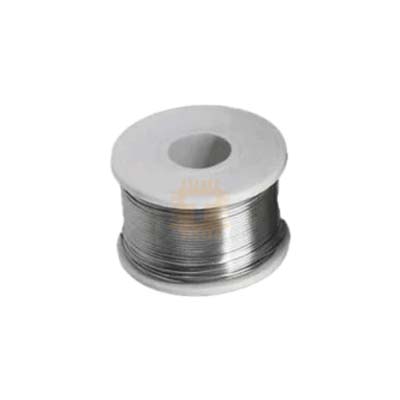
| Name | Solder Wire Lead Roll 60/40 1.2mm 200g High Quality |
| Code | TA1831 |
| Price | Rs.2,500.00 |
| In Stock | Yes |
| Package | SOLDER |
Product Details
The Solder Wire Lead Roll 60/40 1.2mm 200g High Quality (1.2mm Heavy Gauge / 200g Spool) is an industrial-grade, heavy-duty electrical soldering alloy engineered for high-thermal-mass soldering, thick wire splicing, high-current connector terminations, transformer lead connections, and power electronics assembly. Formulated with a classic 60% Tin (Sn) and 40% Lead (Pb) metallurgical ratio, it features a low melting range (183°C–190°C) with a narrow plastic transition phase, enabling rapid liquefaction, smooth capillary wetting, and quick joint solidification. Incorporating an integrated, non-corrosive multi-channel rosin flux core (typically 1.8%–2.2%), its heavy 1.2mm diameter delivers maximum solder volume per feed stroke, making it ideal for large solder lugs, heavy ground planes, high-power terminal blocks, and automotive wiring harnesses.
Specifications
- Alloy Composition: 60% Tin (Sn) / 40% Lead (Pb)
- Wire Diameter: 1.2 mm (±0.05 mm / Heavy-Duty Power Gauge)
- Net Solder Weight: 200 g (Gross spool weight approx. 220 g to 235 g)
- Flux Type / Core: Continuous Integrated Rosin Activated (RA) / Mildly Activated (RMA) Core
- Flux Content / Percentage: 1.8% to 2.2% (By weight)
- Melting Temperature Range:
- Solidus: 183°C (361°F)
- Liquidus: 190°C (374°F)
- Recommended Iron Tip Temperature: 330°C to 380°C (626°F to 716°F)
- Density: Approx. 8.5 g/cm³
- Electrical Conductivity: Approx. 11.5% to 12% IACS
- Flux Residue Characteristics: Light amber, transparent, non-conductive, non-corrosive under normal ambient conditions
- Spool Dimensions: Approx. 55 mm Diameter × 50 mm to 55 mm Height
- Spool Hub Hole Diameter: Approx. 20 mm (Standard dispenser spindle size)
Features
- High-Volume 1.2mm Feed: Delivers substantial solder volume quickly, reducing dwell time on large thermal mass connections such as thick copper lugs, ground tabs, and heavy busbars.
- Low Melting Point & Fast Capillary Action: Melts cleanly at ~185°C, ensuring rapid flow and complete penetration into stranded wire cores and large solder cups.
- Continuous Rosin Flux Core: High-activity internal flux cleans heavy surface oxidation on copper, brass, tin, and nickel-plated terminals on contact without requiring external paste flux.
- Mechanically Robust Joints: Solidifies into shiny, crack-resistant fillets with high mechanical shear strength and low contact resistance under high-vibration environments.
- Generous 200g Workshop Spool: Designed for high-usage environments, providing long-lasting wire supply for manufacturing, automotive repairs, and electrical repair shops.
Common Applications
- High-Power Wire Splicing & Tinning: Soldering heavy-gauge cables (10 AWG to 16 AWG), battery leads, and high-current power distribution harnesses.
- Heavy-Duty Connector Terminations: Soldering XT60/XT90 plugs, high-amperage Anderson Powerpoles, large banana jacks, ring terminals, and chassis ground studs.
- Power Electronics & Inverters: Assembling high-power inductors, filter chokes, high-capacity bridge rectifiers, and heavy heat-sinked power transistors (TO-247 / TO-3P).
- Automotive & Marine Electrical: Splicing trailer harnesses, alternator wiring, starter motor relay leads, and marine switch panels.
- Motor & Transformer Repair: Terminating thick magnet wire coils, stator leads, and heavy winding taps on transformers and electric motors.
Usage Tips
- Soldering Iron Power & Tip Match: Due to the 1.2mm wire thickness and the large joints it is designed for, use a soldering iron or station rated at 60W to 100W+ equipped with a wide chisel or bevel tip (3mm–5mm) to supply adequate heat.
- Temperature Setting: Set your soldering station between 340°C and 370°C. Higher heat allows the large solder mass to melt and wet instantly without prolonged heating of the surrounding insulation.
- Feed Technique: Heat both the wire lead and the terminal for 2–3 seconds until hot, then feed the 1.2mm solder wire into the joint junction until the solder flows completely through the stranded bundle.
- Flux Residue Cleaning: The rosin residue is electrically non-conductive and protective, but can be removed for aesthetic cleanliness or conformal coating application using Isopropyl Alcohol (IPA ≥ 99%) and a stiff brush.
- Health & Safety Guidelines:
- Ensure the workstation has adequate ventilation or an active fume extraction system to remove soldering fumes.
- Contains lead; wash hands thoroughly with soap and water after handling solder wire, and avoid eating or drinking in the workspace.
Sharing is caring, show love and share the product with your friends.
Featured

Add to Cart

Add to Cart

Other Products
Add to Cart

Add to Cart