UV Curable PCB Solder Mask Ink Blue ZWG-UV-600 (TA1915) Products
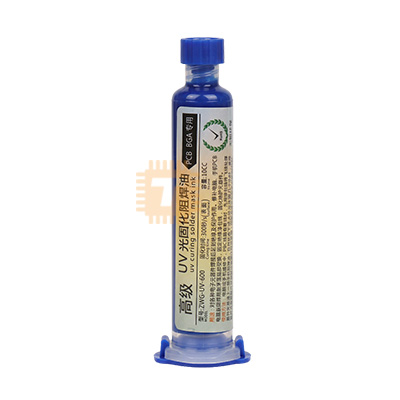
| Name | UV Curable PCB Solder Mask Ink Blue ZWG-UV-600 |
| Code | TA1915 |
| Price | Rs.370.00 |
| In Stock | Yes |
| Package | ACC |
Product Details
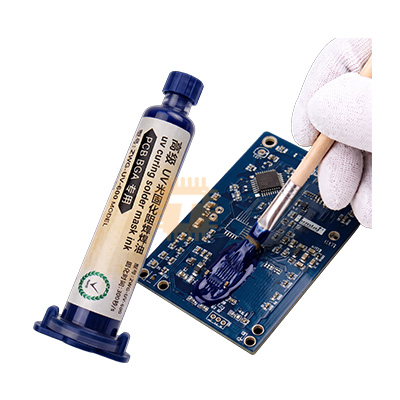
The UV Curable PCB Solder Mask Ink Blue ZWG-UV-600 is an industrial-grade, single-component liquid photoimageable polymer resin engineered for printed circuit board fabrication, trace insulation, jumper wire anchoring, and PCB solder mask repair. Formulated to polymerize and cross-link rapidly under exposure to ultraviolet (UV) radiation or direct sunlight, it forms a durable, heat-resistant, and dielectric protective barrier over bare copper traces. With high resistance to molten solder during soldering and wave-soldering processes, along with resilience against aggressive flux cleaning solvents, it prevents solder bridging between fine-pitch pads, shields copper from atmospheric oxidation, and delivers a distinctive royal blue gloss finish ideal for matching blue Arduino/development boards, color-coding circuit modifications, and electronics rework.
Specifications
- Product Model / Series: ZWG-UV-600 Series
- Chemical Formulation: Single-Component Acrylate UV-Curable Liquid Photopolymer (Solvent-free formulation)
- Color / Finish: Royal Blue Gloss (Semi-translucent deep blue film)
- Container Packaging: Dispenser Syringe Barrel (Includes push plunger and precision dispensing needle tip)
- Net Volume / Weight: Approx. 10 cc (10 ml / ~10 g to 12 g)
- Curing Wavelength Spectrum: UV-A Spectrum, 365 nm to 405 nm (Optimal peak around 395 nm)
- Curing Time:
- High-Power Benchtop UV Curing Lamp / LED (~395 nm, 10W–30W): 10 to 30 seconds
- Handheld Portable UV Flashlight (3W–5W): 60 to 120 seconds (depending on layer thickness)
- Direct Solar Exposure: 5 to 15 minutes (under intense direct sunlight)
- Viscosity: 100 to 200 Pa·s (Thixotropic paste, spreads smoothly under squeegee or needle tip)
- Dielectric Breakdown Strength: ≥ 500 V/mil (≥ 20 kV/mm)
- Insulation Resistance: ≥ 1.0 × 10¹² Ω (After complete UV polymerization)
- Solder Heat Resistance: Withstands up to 260°C to 280°C for ≥ 10 to 20 seconds (Safe for standard wave, reflow, and hand-soldering contact)
- Solvent & Chemical Resistance: Resistant to Isopropyl Alcohol (IPA), acetone, rosin solvents, ultrasonic wash detergents, and mild acids
- Adhesion Rating: Class 1 / 100% Cross-Cut Tape Test passing on degreased copper-clad laminate and FR4 epoxy
- Shelf Life: Approx. 12 months when stored sealed in a cool, dark environment (0°C to 10°C)
- Gross Package Weight: Approx. 25 g
Features
- Rapid UV Photopolymerization: Cures within seconds under a 395nm UV light source into a rock-hard, non-tacky protective film, drastically speeding up micro-soldering and trace-repair turnaround times.
- Aesthetic Blue Finish: Matches the factory appearance of standard blue circuit boards (such as Arduino, ESP modules, and specialized audio gear) while providing sharp optical contrast over bare copper traces.
- Exceptional Thermal Shock Resistance: Fully cured resin withstands prolonged contact with 260°C+ molten solder and direct heat-gun airflow without charring, bubbling, or peeling away from the copper substrate.
- High Dielectric Isolation: Provides a non-conductive boundary that eliminates stray capacitance, short-circuits, and dendritic copper growth between high-density SMD traces.
- Precision Syringe Delivery: Packaged in an amber/black light-blocking syringe barrel paired with a blunt needle, allowing micron-level dot application over scratched traces or jumper wires without waste.
- Solvent & Cleaner Immersion Safe: Unaffected by post-soldering defluxing chemicals, surviving ultrasonic baths with 99% Isopropyl Alcohol without softening or dissolving.
Common Applications
- Micro-Soldering & Jumper Wire Anchoring: Insulating and mechanically tacking down 0.01mm–0.1mm enameled jumper wires during mobile phone, laptop, and console motherboard repairs.
- Torn PCB Pad & Trace Restoration: Rebuilding delaminated circuit traces, broken vias, and lifted solder pads damaged during component desoldering or board drops.
- DIY PCB Masking & Photolithography: Applying a professional blue protective solder mask over home-etched or CNC-milled FR4 copper boards using a transparency film photomask.
- Color-Coded Circuit Modification: Marking specific circuit modifications, ground planes, or low-voltage signal paths on prototype PCBs for quick visual identification.
- Environmental Moisture & Corrosion Barrier: Sealing exposed test points and delicate copper traces against coastal salt air, automotive moisture, and battery acid leaks.
Usage Tips
- Surface Preparation (CRITICAL):
- Ensure the target copper or FR4 surface is completely clean, deoxidized, and degreased prior to application.
- Clean the repair zone thoroughly with 99% Isopropyl Alcohol (IPA) and let it evaporate fully. Any leftover rosin flux, finger oils, or moisture will prevent the mask from adhering, causing it to flake off after curing.
- Application & Layer Thickness:
- Apply only a very thin, uniform coat over the exposed trace or wire.
- If applied excessively thick in a single glob, UV light cannot penetrate the deep blue pigments at the bottom layer, leaving wet, uncured liquid trapped underneath a hardened top skin. For deep gouges, build up the thickness using two or three successive thin layers, curing each layer fully with the UV light before applying the next.
- UV Exposure Best Practices:
- Hold the 395nm UV lamp or torch 1 cm to 2 cm away from the board for 15 to 30 seconds.
- Gently touch the edge of the cured resin with a fine-tip tweezer to verify that it has polymerized into a rigid, non-tacky finish before proceeding with hot-air rework or assembly.
- DIY PCB Mask Exposure with Film (Photolithography):
- Spread the blue ink evenly across the board and place a clear plastic film (such as an acetate transparency sheet) over it to smooth it flat without air bubbles.
- Overlay your negative pad artwork (where pads are blacked out and traces are clear), expose it under a UV lamp for 60 to 90 seconds, peel off the transparency, and wash away the soft, unexposed pad areas using an alcohol wipe.
- Storage & Eye Safety Guidelines:
- Store the syringe in a refrigerator or cool, dark cabinet (5°C to 20°C) with the black protective cap tightly fitted on the tip. Keep it completely shielded from ambient daylight to avoid premature hardening inside the needle.
- Wear certified UV-blocking safety glasses when curing the resin to protect your eyes from intense ultraviolet reflections emitted by high-power UV curing lamps.
Sharing is caring, show love and share the product with your friends.
Featured


Add to Cart

Add to Cart