Voice Sound Detection Mic Sensor Module for Arduino (MD0220) Products
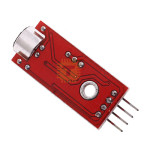
| Name | Voice Sound Detection Mic Sensor Module for Arduino |
| Code | MD0220 |
| Price | Rs.200.00 |
| In Stock | Yes |
| Package | MODULE |
Product Details
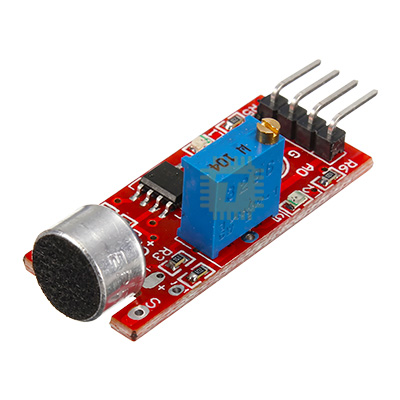
The Voice Sound Detection Mic Sensor Module is an audio sensing breakout board designed to measure ambient sound levels and detect acoustic events. Built around a sensitive electret microphone and an onboard LM393 comparator amplifier, it provides both real-time analog sound wave signals and a triggerable digital output. It is widely used in Arduino, Raspberry Pi, and interactive electronics projects to trigger actions based on sound triggers like clapping, knocking, or environmental noise spikes.
Specifications
- Sensor Type: Electret condenser microphone with LM393 comparator chip
- Operating Voltage: 3.3V to 5V DC
- Outputs: Dual Output (1x Analog Output, 1x Digital Output)
- Sensitivity Control: Adjustable threshold sensitivity via onboard multi-turn potentiometer
- Status Indicators: Onboard Power LED and Digital Output Trigger LED
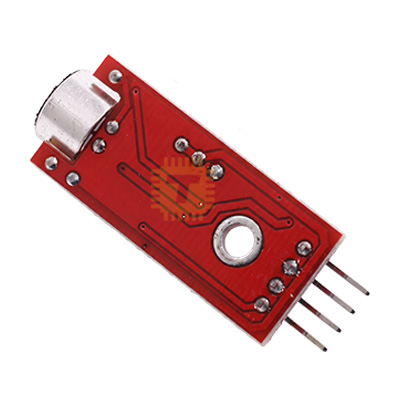
- Mounting Holes: Standard 3mm diameter mounting hole for easy mechanical installation
Interface and Pinout Guide
- VCC: 3.3V to 5V Power Input
- GND: Common Power and Signal Ground Reference
- AO (Analog Output): Real-time analog output voltage corresponding to the live acoustic signal captured by the microphone.
- DO (Digital Output): Digital logic output. When the ambient sound intensity is below the configured threshold, the output stays Low. When the sound intensity rises above the threshold, the output toggles to High.
Key Features
- Dual Signal Outputs: Provides both direct analog acoustic waveforms for continuous sound monitoring and a clean digital high/low trigger for simple threshold detection.
- Adjustable Sensitivity Threshold: Features an onboard potentiometer to precisely fine-tune the digital switching threshold, preventing accidental triggers from background ambient noise.
- Real-time Diagnostic LEDs: Integrated visual indicators allow rapid bench testing by showing power status and signalling whenever the sound threshold is crossed.
- Broad Microcontroller Compatibility: Operates seamlessly at both 3.3V and 5V logic levels, making it directly compatible with Arduino, ESP32, STM32, and Raspberry Pi boards without extra level shifters.
Common Applications
- Sound-Activated Switches: Triggering relays, LED lighting strips, or smart home appliances using clap or knock detection.
- Security Alarm Systems: Detecting glass breakage, sudden loud noises, or unauthorized entry sounds in home monitoring projects.
- Interactive Robotics: Enabling autonomous rovers or props to respond to voice commands, whistles, or room noise levels.
- Acoustic Noise Monitoring: Measuring relative ambient sound level variations in classrooms, offices, or industrial workspaces.
Usage Tips
- Calibrating the Potentiometer: Turn the brass screw on the blue potentiometer while observing the onboard DO-LED in a quiet room. Adjust it until the LED turns off, then test by clapping your hands to ensure the LED flashes reliably only when sound occurs.
- Analog Signal Processing: When reading from the AO pin using an Arduino ADC, sample the signal continuously over a short window (e.g., 50 milliseconds) to catch peak-to-peak voltage amplitudes rather than taking a single static reading.
- Noise Isolation: Acoustic sensors are sensitive to structural mechanical vibrations. Mount the module using rubber grommets or foam tape if installed inside a robotic frame containing motors or moving parts.
Sharing is caring, show love and share the product with your friends.
Featured
Add to Cart


Add to Cart
Other Products

Add to Cart