1.5V AA Battery 2pcs (AKKO STAR) (BA0268) Products
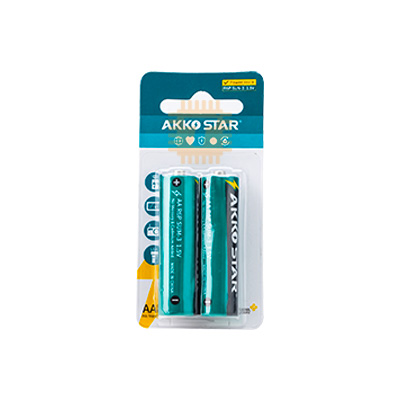
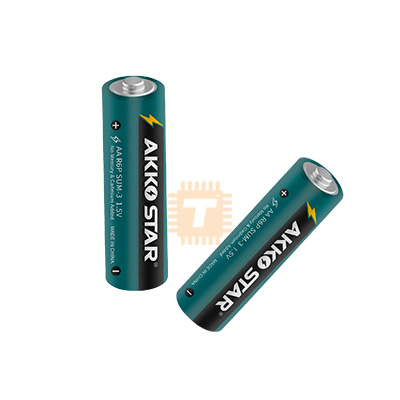
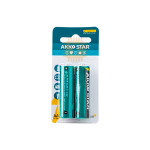
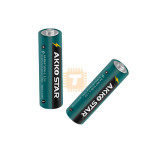
| Name | 1.5V AA Battery 2pcs (AKKO STAR) |
| Code | BA0268 |
| Price | Rs.60.00 |
| In Stock | Yes |
| Package | BATTERY |
Product Details
The 1.5V AA Battery 2pcs (AKKO STAR) is a convenient twin-pack of standard cylindrical primary dry-cell batteries engineered to provide steady, economical DC power for low- to moderate-drain consumer electronics, DIY prototyping kits, and household devices. Built to standard international AA form-factor dimensions (R6 / UM-3), these reliable zinc-manganese dry cells deliver a nominal output of 1.5V per cell. With leak-resistant sealing technology and ready-to-use shelf stability, they serve as a dependable, plug-and-play power source for battery holders, wireless peripherals, handheld instruments, and educational robotics projects.
Specifications
- Brand / Series: AKKO STAR
- Cell Size / Designation: AA (ANSI: 15D / 15A, IEC: R6 / LR6, JIS: UM-3)
- Package Quantity: 2 Pieces (Twin-Pack)
- Nominal Voltage: 1.5 V DC per cell (3.0 V DC combined in series configuration)
- Electrochemical Chemistry: Zinc-Carbon / Alkaline Manganese Dioxide Primary Dry Cell
- Rechargeability: Non-Rechargeable (Single-Use Primary Battery)
- Discharge Cutoff Voltage: Approx. 0.9 V DC per cell
- Form Factor: Standard Cylindrical Cell with Raised Positive Button Terminal
- Terminal Polarity: Positive (+) Pip / Button Top, Negative (-) Flat Base Plate
- Body Dimensions: Approx. 14.5 mm Diameter × 50.5 mm Height (Standard AA physical profile)
- Operating Ambient Temperature: -10°C to +50°C
- Storage Temperature: Recommended 10°C to 25°C in dry conditions
- Jacket / Casing: Insulated Steel / Metal Foil Jacket with Anti-Corrosion Seal
- Environmental Compliance: Mercury-Free (Hg-Free) and Cadmium-Free (Cd-Free) construction
- Net Weight: Approx. 14 g to 23 g per cell (Approx. 28 g to 46 g for the 2-pack)
Features
- Standard AA Universal Fit: Fully compatible with standard 1xAA, 2xAA, 3xAA, and 4xAA battery holders, enclosures, clips, and commercial electronics battery bays.
- Leak-Resistant Casing Design: Reinforced end-seal crimping and protective jacket prevent internal electrolyte leakage, protecting device terminals and contacts from oxidation damage.
- Mercury & Cadmium Free: Built with environmentally friendly dry-cell chemistry that complies with non-hazardous consumer disposal standards.
- Stable Voltage Output: Delivers smooth, low-noise DC power ideal for analog sensor breakout boards, logic microcontroller circuits, and audio devices sensitive to switching power ripple.
- Pre-Charged & Ready for Use: Ready for immediate operation right out of the blister pack with strong shelf retention for emergency reserves and repair kits.
Common Applications
- DIY Electronics & Microcontroller Prototyping: Powering Arduino boards, sensor arrays, and wireless ESP32/ESP8266 test nodes using 2xAA (3V) or 4xAA (6V regulated) battery holders.
- Educational Robotics Kits: Supplying driving current for dual-wheel robot chassis, line-tracking cars, micro servo motors, and electronic hobby kits.
- Handheld Diagnostic & Test Equipment: Powering compact digital multimeters, cable tracers, logic testers, and infrared thermometers.
- Consumer & Household Peripherals: Operational power for wireless optical mice, keyboards, TV/AC remote controls, and digital wall clocks.
- Portable Lighting & Audio: Pocket LED flashlights, headlamps, mini portable radios, and handheld electronic toys.
Usage Tips
- Non-Rechargeable Safety Warning (CRITICAL):
- Do NOT attempt to recharge these primary dry-cell batteries in NiMH, NiCd, or Li-ion battery chargers.
- Applying reverse charging current will cause internal gas buildup, electrolyte rupture, chemical leakage, and severe overheating.
- Correct Polarity Alignment:
- Always observe positive (+) and negative (-) terminal markings inside the battery bay or holder.
- Installing cells in reverse orientation can damage polarity-sensitive semiconductor components or prevent motors and circuit boards from functioning.
- Battery Mixing Guidelines: Avoid mixing fresh batteries with partially depleted ones, and do not mix different battery chemistries (e.g., zinc-carbon, standard alkaline, or rechargeable NiMH) within the same device. Mixing uneven cells causes the weaker cell to undergo forced deep discharge and increases the risk of venting.
- Long-Term Storage Recommendation: Remove batteries from electronics, test meters, and microcontroller projects if they will sit unused for several weeks or months. Parasitic quiescent loads can draw the cells below cutoff voltage, inducing eventual terminal leakage.
- Storage Conditions: Keep unopened twin-packs in a cool, dry place away from direct sunlight, open flames, or loose conductive metal hardware (such as screws, nuts, or wire clippings) that could short-circuit the exposed terminals.
Sharing is caring, show love and share the product with your friends.
Featured


Add to Cart


Other Products

Add to Cart