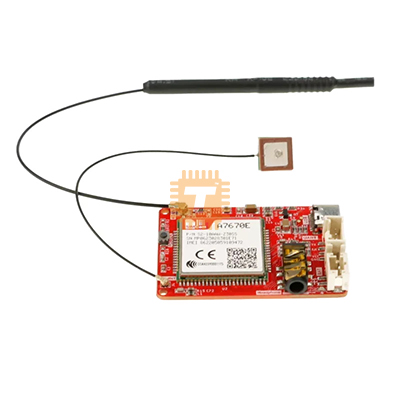
Air780E GSM Chip 4G Cat.1 LTE Low-Power (IC0348) Products
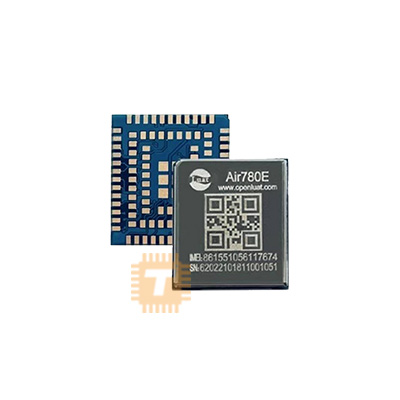
| Name | Air780E GSM Chip 4G Cat.1 LTE Low-Power |
| Code | IC0348 |
| Price | Rs.2,350.00 |
| In Stock | Yes |
| Package | MODULE |
Product Details
The Air780E is an ultra-compact, low-power 4G LTE Category 1 (Cat.1) wireless communication module. Engineered specifically for high-efficiency IoT applications, it supports standard LTE-FDD network bands and offers excellent compatibility with existing 4G networks. Its miniature footprint and optimized standby current consumption make it a premier choice for remote data logging, vehicle tracking, asset monitoring, and battery-operated telemetry systems.
Specifications
- Module Type: 4G LTE Category 1 (Cat.1)
- Network Bands Supported: LTE-FDD: B1, B3, B5, B8 (Optimized for widespread regional coverage)
- Data Transmission Speeds: Up to 10 Mbps Downlink / Up to 5 Mbps Uplink
- Operating Voltage Range: 3.3V to 4.3V DC (3.8V recommended)
- Low-Power Performance: Advanced power-saving mode (PSM) with ultra-low standby current draw (~ microampere range)
- Communication Interfaces: Multiple UART ports, I2C, SPI, USB 2.0, Analog-to-Digital (ADC) pins, and GPIOs
- SIM Card Compatibility: Supports standard 1.8V and 3.0V SIM cards / eSIM configurations
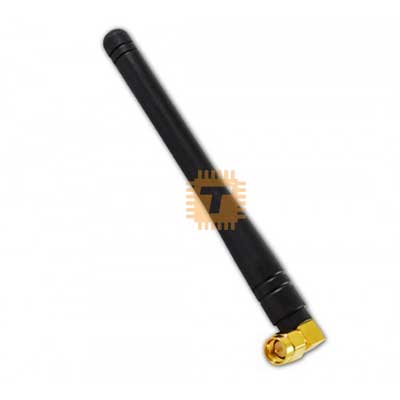
- Antenna Port: 50-Ohm characteristic impedance RF pad interface
Interface and Connection Guide
- VBAT: Main Power Supply Input (3.3V to 4.3V). Ensure your power source can supply peak currents up to 2A during cellular transmission bursts.
- GND: Common Ground Reference.
- UART1_TX / UART1_RX: Main Serial Communication lines used to send AT commands or transmit data via an external microcontroller.
- USB_DP / USB_DM: USB Differential Data lines for high-speed firmware updates and diagnostics.
- RESET: Hardware reset line (Active Low, pull down briefly to reboot the module).
- PWRKEY: Power On/Off control line (Pull down to ground for a short duration to initiate the boot sequence).
- ANT: RF antenna connection pad or IPEX connector pin.
Key Features
- True Ultra-Low Power Consumption: Leverages advanced sleep architectures and Power Saving Mode (PSM) to minimize energy draw during idle states, significantly prolonging battery lifespans in isolated field deployment rigs.
- Highly Integrated Footprint: Packs a full 4G Cat.1 baseband processor, RF transceiver, and power management units into a highly space-efficient package, dropping seamlessly into tight electronic configurations.
- Broad AT Command Protocol Suite: Supports standard industrial AT command instructions alongside extended TCP, UDP, MQTT, HTTP, and FTP cellular network protocols right out of the box.
- Flexible Dual Architecture: Operates flawlessly as a transparent wireless modem managed via an external host microcontroller (like an Arduino or STM32), or acts as a standalone controller utilizing internal script compilation runtimes.
Common Applications
- Smart Metering and Telemetry: Remote monitoring of electrical grids, automatic water flow loggers, and localized weather station transmitters.
- Asset Tracking Systems: Real-time asset logistics updates, vehicle anti-theft trackers, and geo-fencing safety beacons.
- Industrial Automation Gateways: Bridging factory machinery data networks to centralized cloud interfaces via secure cellular bands.
- Shared Mobility Terminals: Powering communication and remote unlocking modules for shared smart bicycles, electric scooters, and vending machines.
Usage Tips
- Power Rail Decoupling: Cellular modules demand high burst currents when handshaking with distant cell towers. Always place a low-ESR 100 micro-Farad tantalum capacitor alongside 0.1 micro-Farad ceramic capacitors directly across the VBAT and GND terminals to avoid voltage dips that trigger unexpected module reboots.
- Logic Level Matching Warning: The GPIO and UART logic structures of the Air780E operate at a 1.8V signal level. If you interface this module directly with common 3.3V microcontrollers (like an ESP32) or 5V microcontrollers (like an Arduino Uno), you must use appropriate logic level shifters to avoid overdriving the input pins and ruining the silicon die.
- Antenna Routing Protocol: Keep the RF track leading from the ANT pin to your physical antenna connector as short and direct as possible. Avoid routing high-speed digital data lines or switching power supply traces directly underneath the RF path to prevent signal attenuation and electromagnetic interference.
Reference: AT Commands
Sharing is caring, show love and share the product with your friends.
Featured


Add to Cart


Add to Cart