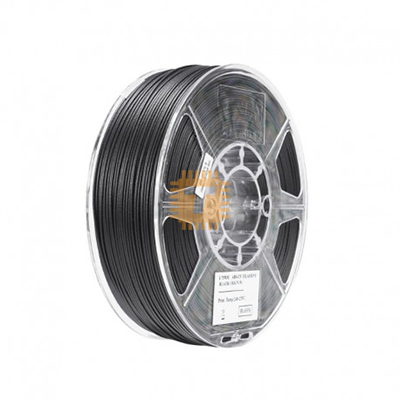
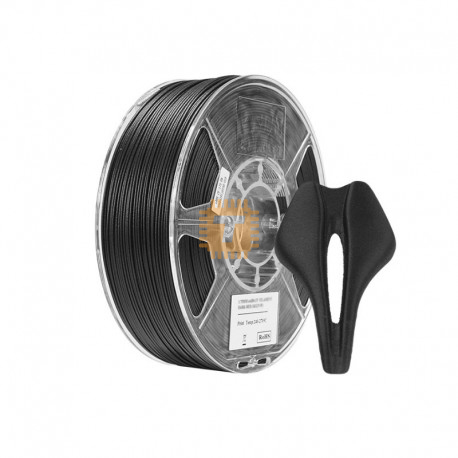
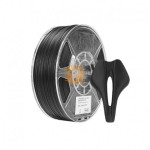
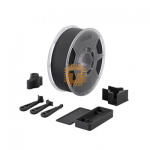
eSUN ABS-CF Carbon Fiber Black 1.75mm 1Kg 3D Printer Filament (ABS Based) (TA1847) Products
| Name | eSUN ABS-CF Carbon Fiber Black 1.75mm 1Kg 3D Printer Filament (ABS Based) |
| Code | TA1847 |
| Price | Rs.9,600.00 |
| In Stock | Yes |
| Package | ACC |
Product Details
The eSUN ABS-CF Carbon Fiber Black 1.75mm 1kg 3D Printer Filament is a high-performance, carbon-fiber-reinforced engineering polymer designed for demanding functional prototyping and industrial manufacturing on desktop FDM 3D printers. Compounded with an ABS base matrix infused with chopped high-modulus carbon fiber strands, this filament delivers exceptional structural rigidity, enhanced dimensional stability, reduced thermal shrinkage, and a premium matte black textured surface finish.
Specification
- Brand / Manufacturer: eSUN
- Product Name: ABS-CF Carbon Fiber Filament
- Color Profile: Matte Carbon Black
- Filament Diameter: 1.75mm (Dimensional accuracy within ±0.03mm)
- Net Weight: 1.0 kg (2.2 lbs) spool
- Base Polymer Matrix: Acrylonitrile Butadiene Styrene (ABS) reinforced with chopped carbon fiber
- Recommended Extruder / Nozzle Temperature: 240°C to 270°C
- Recommended Heated Bed Temperature: 95°C to 110°C
- Recommended Chamber Temperature: Enclosed printing recommended (40°C to 60°C)
- Printing Speed Range: 30mm/s to 80mm/s (High-speed compatible up to 150mm/s+ on enclosed core machines)
- Cooling Fan Speed: 0% to 20% (Low or OFF for maximum layer strength)
- Heat Deflection Temperature (HDT): Approx. 85°C to 95°C (at 0.45 MPa)
- Tensile Strength: Approx. 45 - 55 MPa
- Flexural Modulus: Approx. 3800 - 4500 MPa
- Spool Material: Eco-Friendly Recyclable Cardboard or High-Temp Plastic Spool
Features
- High Rigidity and Structural Strength: Chopped carbon fiber reinforcement significantly elevates the flexural modulus and tensile stiffness of the ABS matrix, resisting mechanical deformation and heavy load strain.
- Significantly Reduced Warping and Shrinkage: Carbon fiber fibers constrain thermal contraction during cooling, making ABS-CF substantially easier to print with less corner curling and edge lifting than standard neat ABS.
- Premium Matte Textured Finish: Produces a stealthy, non-reflective matte black surface that effectively masks layer lines, delivering finished parts that look like injection-molded components.
- High Thermal and Chemical Resistance: Retains strong mechanical integrity and load resistance at elevated working temperatures up to roughly 90°C, while offering good resistance to oils, greases, and environmental exposure.
- Tight Dimensional Tolerances: Precision manufactured with strict ±0.03mm diameter control, preventing filament slipping and extrusion fluctuations during long industrial printing cycles.
Common Applications
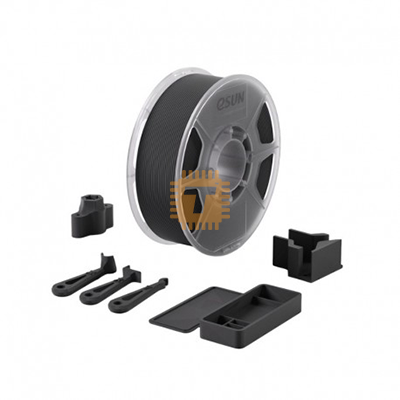
- Automotive and Drone Components: Printing lightweight structural brackets, motor mounts, propeller guards, intake ducts, and aerodynamic fairings exposed to vibration and mechanical stress.
- Industrial Jigs, Fixtures, and Tooling: Fabricating rigid assembly jigs, drilling guides, robotic end-of-arm tooling (EOAT), and manufacturing aids.
- Functional Enclosures and Mechanical Brackets: Housing electronic assemblies, radio gear, and high-load mechanical linkages requiring structural rigidity and high heat deflection resistance.
Professional Installation and Maintenance Tips
- Must Use an Abrasion-Resistant Nozzle: Carbon fiber strands are highly abrasive to soft brass. Always install a hardened steel, bi-metal, or ruby-tipped nozzle (0.4mm or preferably 0.6mm) to prevent rapid nozzle wear and diameter widening.
- Print Inside an Enclosed Chamber: To achieve optimal layer-to-layer bonding strength and prevent internal delamination, print with the machine doors closed and maintain an ambient build chamber temperature of 40°C to 60°C.
- Dry Thoroughly Before Printing: Like all ABS-based polymers, ABS-CF is hygroscopic. Pre-dry the filament in an active filament dryer box or convection oven at 70°C to 80°C for 4 to 6 hours before printing to eliminate moisture bubbles and stringing.
- Use Bed Adhesion Aids on High-Temp Surfaces: Apply high-temperature bed adhesive (such as ABS juice, bed spray, or liquid adhesion glue) onto a PEI, smooth glass, or textured plate heated to 100°C - 105°C to secure large first layers.
Sharing is caring, show love and share the product with your friends.
Featured


Add to Cart