LR35B 315MHz 150m 4.5V 5V 3.5mA ASK Superheterodyne Wireless Receiver Module (MD0052) Products
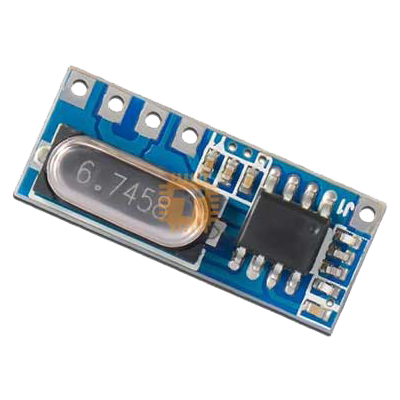
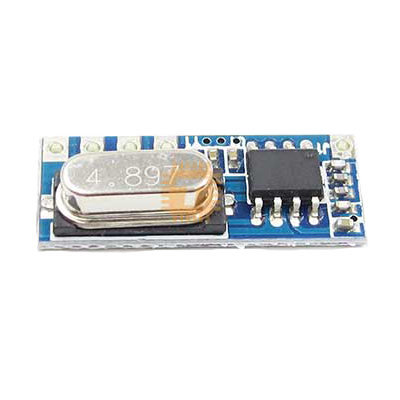
| Name | LR35B 315MHz 150m 4.5V 5V 3.5mA ASK Superheterodyne Wireless Receiver Module |
| Code | MD0052 |
| Price | Rs.300.00 |
| In Stock | Yes |
| Package | MODULE |
Product Details
The LR35B 315MHz Wireless Receiver Module is a high-sensitivity, low-power superheterodyne RF receiver designed for long-range, interference-resistant wireless communication. Operating on the 315MHz ISM frequency band using Amplitude Shift Keying (ASK/OOK) modulation, it offers superior frequency stability, sensitivity, and noise immunity compared to basic regenerative receiver modules. It is widely used in remote keyless entry, wireless alarms, industrial automation, and smart home switching systems.
Specifications
- Model: LR35B
- Receiver Architecture: Superheterodyne receiver with crystal local oscillator
- Operating Frequency: 315 MHz
- Modulation Method: ASK / OOK (Amplitude Shift Keying / On-Off Keying)
- Operating Voltage: 4.5V to 5.5V DC (5V standard)
- Working Current: ~3.5mA (Low-power consumption)
- Receiver Sensitivity: -105 dBm to -110 dBm
- Transmission Range: Up to 150 meters (in open space with matched antenna and transmitter power)
- Data Transfer Rate: 0.5 kbps to 10 kbps
- Operating Temperature Range: -20°C to +70°C
- Dimensions: Compact PCB footprint with standard 2.54mm pin spacing
Interface and Pinout Guide
- VCC: 4.5V to 5.5V DC Power Supply Input
- GND: Common Ground Reference
- DATA: Demodulated digital data output (Directly connects to microcontroller GPIO or hardware decoder ICs like PT2272/EV1527)
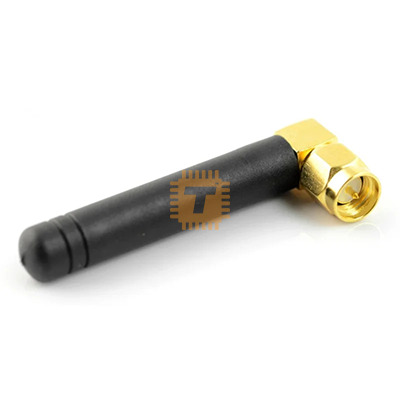
- ANT: External antenna solder hole/pad (Connect a 23cm single-core copper wire for optimal 315MHz reception)
Key Features
- Superheterodyne Architecture: Employs a crystal oscillator (PLL) frequency-locking design, eliminating frequency drift caused by ambient temperature changes or mechanical vibrations.
- High Sensitivity & Noise Suppression: Delivers up to -110 dBm sensitivity, filtering out out-of-band electromagnetic interference for longer reliable reception distances.
- Low Current Draw: Consumes only ~3.5mA during continuous reception, making it practical for energy-efficient control receivers and battery-backed monitoring hubs.
- Seamless Decoder Compatibility: Interfaces easily with common hardware decoders (e.g., PT2272, SC2272) as well as microcontroller-based software decoding libraries (e.g., rc-switch, RadioHead).
Common Applications
- Wireless Remote Controls: Gate openers, garage doors, motorized blinds, and wireless vehicle barriers.
- Security & Alarm Systems: Wireless PIR motion detectors, door/window magnetic contact sensors, and emergency panic buttons.
- Smart Home Relays: Remote light switching, appliance socket triggers, and home automation control links.
- Industrial Telemetry: Low-speed wireless data acquisition, remote status signals, and wireless triggering systems.
Usage Tips
- Antenna Optimization: For maximum reception range, solder a straight, solid-core copper wire measuring approximately 23 cm (quarter-wavelength for 315 MHz) to the ANT pad. Keep the antenna as straight and vertical as possible, away from large metal surfaces.
- Power Supply Filtering: Superheterodyne receivers are sensitive to power rail noise. Avoid powering the module directly from noisy, unregulated switching supplies without adequate decoupling capacitors (add a 0.1µF ceramic capacitor across VCC and GND close to the module pins).
- Decoding Signal Logic: In the absence of an active RF transmission, the DATA pin may output high-frequency random thermal noise. Microcontroller firmware should filter pulses using timing-specific decoder libraries (such as rc-switch) to extract valid data packets reliably.
Sharing is caring, show love and share the product with your friends.
Featured


Add to Cart