
NodeMCU ESP32S Dev Board MicroUSB CP2102 0.96" OLED Display WiFi Bluetooth IoT (MD0299) Products
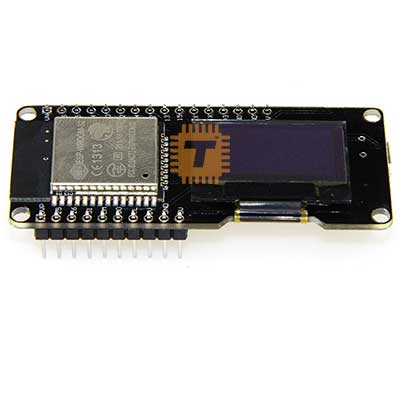
We are sorry but the product is out of stock, please check back after few days.
| Name | NodeMCU ESP32S Dev Board MicroUSB CP2102 0.96" OLED Display WiFi Bluetooth IoT |
| Code | MD0299 |
| Price | Rs.2,510.00 |
| In Stock | No |
| Package | MODULE |
Product Details
The ESP32S OLED Development Board is an all-in-one IoT (Internet of Things) platform that integrates a powerful ESP32 dual-core processor with an onboard 0.96 inch OLED display. Featuring a native CP2102 USB-to-UART bridge controller, this board provides seamless plug-and-play programming over a Micro-USB cable. It combines 2.4 GHz dual-mode Wi-Fi and Bluetooth connectivity with a compact layout, making it an excellent platform for smart home hubs, portable sensor nodes, and real-time data tracking.
Specifications
- Core Chipset: ESP-WROOM-32 module running on TSMC 40nm low-power architecture
- Display Integrated: 0.96 inch OLED display (typically driven via internal I2C connection)
- Wireless Protocols: 2.4 GHz Dual-Mode Wi-Fi (802.11 b/g/n) and Bluetooth Low Energy (BLE / v4.2)
- USB-to-Serial Driver: Silicon Labs CP2102
- Networking Stack: Fully supports LwIP protocol architecture
- Wi-Fi Operating Modes: AP (Access Point), STA (Station), and hybrid AP plus STA mode
- RF Component Integration: Features an integrated PCB antenna, RF balun, power amplifier, low-noise amplifier (LNA), filter networks, and an advanced power management module
- Form Factor: Ultra-compact footprint designed for easy embedding into final product chassis
Interface and Pinout Guide
- Micro-USB Port: Used for flashing firmware, serial debugging, and supplying 5V main power
- VCC / 5V: Main power input rail (handles 5V regulated supplies directly)
- 3V3: Regulated 3.3V output rail powered by the onboard LDO regulator
- GND: Common ground reference connections
- GPIO Pins: Digital inputs and outputs breaking out hardware I2C, SPI, UART, and analog ADC/DAC channels
- EN (Reset): Onboard physical push button to hardware-reset the ESP32 microchip
- BOOT: Physical button used to manually force the chip into serial download mode if required during programming
Key Features
- Onboard Visual Interface: The integrated 0.96 inch OLED screen allows you to display live sensor readouts, network statuses, or IP addresses right out of the box without complex external breadboard wiring.
- Dual-Core Processing Power: Driven by a high-frequency 32-bit dual-core processor, it easily handles simultaneous background Wi-Fi tasks alongside heavy frontend user application processes.
- Minimal PCB Footprint: Engineered to optimize board space, the entire RF front-end and display routing are contained within a tiny footprint, making it ideal for sleek, wearable, or pocket-sized designs.
- Low Power Standby Modes: Fully utilizes the energy-saving states of the ESP32 chip, drawing minimal current during sleep intervals to extend external battery life.
Common Applications
- Wireless Weather Terminals: Reading local environment sensors via I2C and printing real-time graphs directly on the OLED while uploading logs to the cloud.
- Smart Home Control Hubs: Serving as a localized Bluetooth scanner or Wi-Fi control gateway for home automation relays.
- Network Testing Gadgets: Building pocket-sized Wi-Fi packet monitors, signal strength indicators, or network ping testers.
- Industrial IoT Monitoring: Deploying remote data logging endpoints that display immediate error diagnostics locally for field operators.
Usage Tips
- OLED Driver Addressing: The internal 0.96 inch OLED is connected via specific ESP32 GPIO pins designated for I2C communication (commonly GPIO 5 for SDA and GPIO 4 for SCL, though check your exact board revisions). Use standard libraries like Adafruit SSD1306 or U8g2, initializing the display at the standard I2C address (typically 0x3C).
- Driver Requirements: Ensure the CP2102 virtual COM port drivers are installed on your computer. If your operating system fails to recognize the development board when plugged in, download the official CP2102 VCP driver package from Silicon Labs.
- GPIO Logic Constraints: Every I/O pin on the ESP32 operates strictly at 3.3V logic levels. If you intend to connect this board to old-style 5V industrial sensors or 5V development modules, you must place a bidirectional logic level shifter on the signal lines to protect the chip from permanent overvoltage damage.
- Power Supply Integrity: When transmitting data over Wi-Fi, the ESP32 can experience sudden power spikes up to several hundred milliamperes. Ensure your Micro-USB cable is of good quality and your power supply can deliver a clean, stable current to avoid erratic brownout resets.
Sharing is caring, show love and share the product with your friends.
Featured

Add to Cart


Other Products
Add to Cart
Add to Cart
Add to Cart
