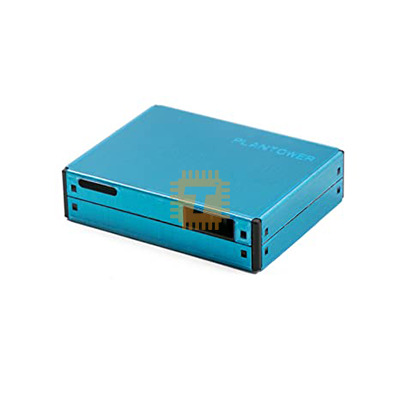
PMS5003 High Precision Laser PM2.5 Air Quality Dust Detection Sensor (MD1035) Products
We are sorry but the product is out of stock, please check back after few days.
| Name | PMS5003 High Precision Laser PM2.5 Air Quality Dust Detection Sensor |
| Code | MD1035 |
| Price | Rs.4,800.00 |
| In Stock | No |
| Package | MODULE |
Product Details
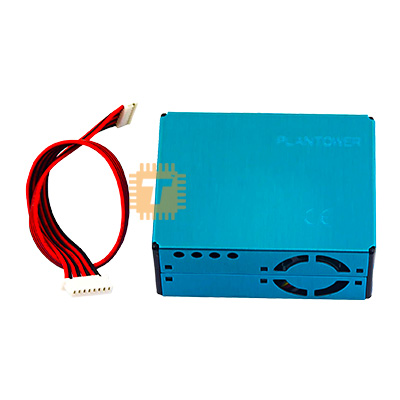
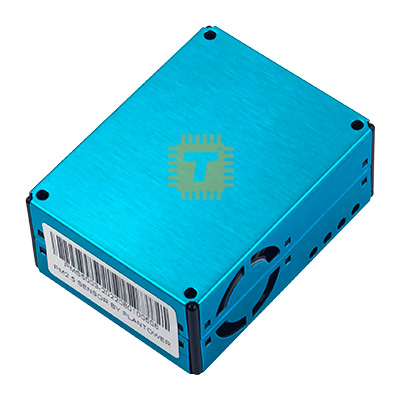
The PMS5003 is a small-footprint, high-precision digital particulate matter (PM) sensor engineered by Plantower. Utilizing advanced laser scattering principles, this module continuously measures the concentration of suspended particulate matter in the surrounding air. It outputs data streams via a standard digital UART serial interface, providing precise, real-time mass concentration readouts for PM1.0, PM2.5, and PM10 profiles. It is a core tracking module for cleanroom monitors, indoor air purifiers, and environmental IoT monitoring stations.
Specification
- Core Sensor Technology: Laser Scattering Principle (Optical Particle Counter)
- Measurement Parameters: PM1.0, PM2.5, PM10 Mass Concentrations (μg /m3)
- Particle Measurement Range: 0.3 μm to 10 μm effective particle size diameter
- Mass Concentration Accuracy:
- ± 10% at 100 -500 μg /m3 range
- ± 10 μg /m3 at 0 - 100 μg /m3 range
- Response / Sampling Time: Less than 1 second single continuous response (10 seconds total stabilization time)
- Output Interface Standard: Digital UART Serial (TTL 3.3V logic levels)
- Default Serial Parameters: 9600 bps, 8 Data Bits, 1 Stop Bit, No Parity
- Operating Input Voltage (VCC): DC 5.0V (± 0.1V required to power internal fan assembly)
- Working Logic Level: 3.3V High / 0V Low (TTL logic level)
- Operating Current Load:
- Active Mode: ≤ 100 mA continuous current draw
- Standby Mode: ≤ 200 μA ultra-low sleep current
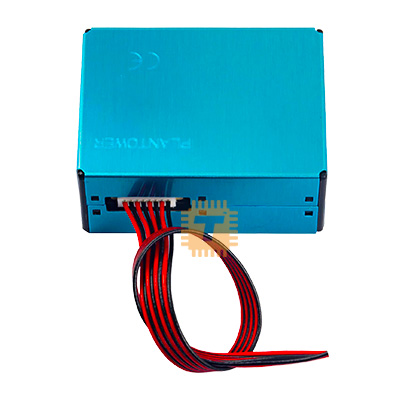
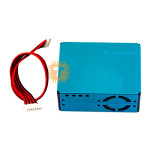
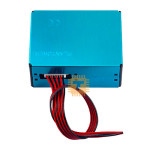
- Physical Connector Style: 10-Pin double-row pitch ribbon cable connector (usually matching 1.27mm header sockets)
Core Features
- Advanced Multi-Channel Particle Tracking: Simultaneously calculates and outputs the independent concentration vectors for PM1.0, PM2.5, and PM10 in a single consolidated serial data packet, eliminating the need to stack multiple sensors.
- Laser-Driven Precision Engine: Unlike cheap infrared (IR) optical dust sensors that struggle to distinguish between ambient heat haze and dust, the stabilized laser diode detects fine particulate matter down to 0.3 μm, enabling stable tracking of tobacco smoke and micro-dust.
- Active Air Flow Induction: Features a miniature, low-noise constant-flow fan built directly inside the shielded plastic housing. This ensures a steady volume of ambient air moves through the internal laser grid regardless of external air movement or orientation.
- Dual Output Modes: Supports both a continuous Passive Streaming Mode (where the sensor automatically dumps a 32-byte data packet down the UART line every 200 - 800ms) and an Active Command Mode (where the sensor remains quiet until the host microcontroller pings a data request command).
- Comprehensive EMI Shielding: Wrapped completely inside a durable metal internal frame structure that protects the sensitive optical detector from external radio frequency interference (RFI) and electromagnetic noise.
Common Applications
- Smart Home Air Purifiers: Serving as the primary environmental sensor built into home air filtering appliances to automatically adjust fan speed settings based on indoor air pollution layers.
- Outdoor IoT Weather Stations: Integrated into public solar-powered environmental telemetry boxes to map real-time Air Quality Index (AQI) values across city grids.
- HVAC Smart Venting Controllers: Interfacing with building ventilation control loops to pull in fresh outdoor air or engage recirculating filter setups when particulate loops spike.
- Portable Handheld AQI Monitors: Functioning as the main internal tracking module in pocket-sized, battery-powered dust checkers used for occupational health inspections.
Professional Usage & Integration Tips
- Manage the Dual Voltage Profile Carefully: This sensor requires a split electrical profile that trips up many developers. You must provide a true 5V supply line to Pin 1 (VCC) to run the mechanical air fan at its calibrated velocity. However, the data communication pins (
TXD,RXD,SET,RESET) operate strictly on 3.3V TTL logic levels. If you connect the sensor directly to a 5V microcontroller (such as an Arduino Uno), you will fry the sensor's UART transmission module. You must place a logic level shifter inline along theRXandTXlines. - Maintain Structural Airway Clearance: When mounting the PMS5003 inside a custom 3D-printed enclosure or industrial case, ensure the air inlet and outlet vents are completely unblocked and exposed to open air. Restricting the ventilation path alters the air flow velocity across the laser channel, leading to inaccurate, artificially low particle concentration reporting.
- Implement Standby Modes to Extend Operational Life: The laser diode and internal fan assembly inside the module have a structural runtime boundary (typically around 3 to 5 years of continuous non-stop operation). To double or triple the operational lifetime of the sensor in remote IoT configurations, do not leave the unit running continuously. Pull Pin 3 (
SET) LOW to place the sensor into a deep standby sleep mode, wake it up once every 5 or 10 minutes, let the fan stabilize air flow for 30 seconds, read the stable data payload, and return it to sleep. - Isolate High-Vibration Enclosure Contact: The internal optical scattering matrix relies on sub-millimeter lens and detector alignment. If you anchor the sensor chassis firmly against high-vibration structural components (such as heavy industrial electric motors or vibrating pump housings), the structural resonance will skew the detector's optical reading grid. Mount the module using soft double-sided foam tape or rubber vibration-isolation standoffs to isolate it from structural impact noise
Sharing is caring, show love and share the product with your friends.
Featured

Add to Cart

Add to Cart


Add to Cart
Other Products
Add to Cart