Solder Wire Lead Roll 60/40 0.8mm 200g High Quality (TA1829) Products
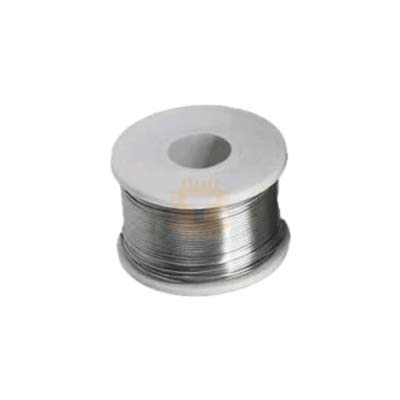
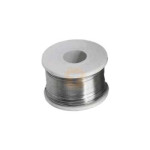
| Name | Solder Wire Lead Roll 60/40 0.8mm 200g High Quality |
| Code | TA1829 |
| Price | Rs.2,500.00 |
| In Stock | Yes |
| Package | SOLDER |
Product Details
The Solder Wire Lead Roll 60/40 0.8mm 200g High Quality (0.8mm Versatile Gauge / 200g Spool) is an industry-standard, high-purity electrical soldering alloy engineered to provide the optimal balance between precision surface-mount work and standard through-hole PCB assembly. Formulated with a classic 60% Tin (Sn) and 40% Lead (Pb) metallurgical ratio, it features a low melting range (183°C–190°C) with a narrow plastic phase, facilitating instant liquefaction, smooth capillary wetting, and rapid solidification. Containing an integrated, non-corrosive multi-channel rosin flux core (typically 1.8%–2.2%), the 0.8mm diameter provides precise volume control for both fine IC pins and larger passive components, producing bright, mechanically sound, and crack-resistant solder joints.
Specifications
- Alloy Composition: 60% Tin (Sn) / 40% Lead (Pb)
- Wire Diameter: 0.8 mm (±0.03 mm / Medium-Fine All-Rounder Gauge)
- Net Solder Weight: 200 g (Gross spool weight approx. 220 g to 235 g)
- Flux Type / Core: Integrated Rosin Activated (RA) / Mildly Activated (RMA) Core
- Flux Content / Percentage: 1.8% to 2.2% (By weight)
- Melting Temperature Range:
- Solidus: 183°C (361°F)
- Liquidus: 190°C (374°F)
- Recommended Iron Tip Temperature: 310°C to 350°C (590°F to 662°F)
- Density: Approx. 8.5 g/cm³
- Electrical Conductivity: Approx. 11.5% to 12% IACS
- Residue Characteristics: Light amber, non-conductive, non-corrosive under normal ambient conditions
- Spool Dimensions: Approx. 55 mm Diameter × 50 mm to 55 mm Height
- Spool Hub Hole Diameter: Approx. 20 mm (Standard solder dispenser spindle size)
Features
- Optimal All-Purpose 0.8mm Gauge: The industry's most versatile diameter—thin enough to avoid bridging on SOIC and 0805/1206 SMD components, yet substantial enough to solder standard through-hole DIP ICs, headers, and 20–24 AWG wires quickly.
- Low Melting Point & Fast Capillary Flow: Melts consistently at ~185°C to ensure smooth wetting across pads with minimal thermal dwell time, protecting heat-sensitive semiconductors.
- Built-In High-Activity Rosin Core: Continuous internal flux core cleans oxidized copper, tin, and nickel-plated surfaces on contact, eliminating the requirement for external flux in standard assembly.
- Bright, Mirror-Like Solder Fillets: Solidifies into shiny, concave joints that simplify visual quality inspections and resist thermal fatigue cracking.
- High-Capacity 200g Workshop Spool: Provides a generous wire length suited for continuous workbench use, production runs, and repair technicians.
Common Applications
- General PCB Assembly & Prototyping: Soldering standard through-hole components (DIP sockets, electrolytic capacitors, resistors) and medium SMD packages (SOIC, SOT-223, 1206/0805).
- Microcontroller & Development Boards: Populating header pins, terminal blocks, and DC jacks on Arduino, ESP32, STM32, and Raspberry Pi breakout boards.
- Audio & Instrument Wiring: Soldering 1/4" phone jacks, XLR connectors, potentiometers, and guitar pickup wiring harnesses.
- Drone & RC Electronics: Soldering flight controllers, 4-in-1 ESC pads, receiver modules, and 18–22 AWG power distribution leads.
- Consumer Appliance & Electronics Repair: Recapping power supply boards, fixing damaged circuit traces, and repairing general consumer electronics.
Usage Tips
- Recommended Soldering Iron Temperature: Set your temperature-controlled soldering station between 320°C and 340°C. Avoid running above 380°C to prevent burning off the internal rosin flux prematurely.
- Joint Heating Technique: Place the soldering iron tip against both the component lead and the PCB pad for 1 to 2 seconds to heat the joint evenly, then feed the 0.8mm wire into the junction opposite the iron tip until a clean, concave fillet forms.
- Flux Residue Removal: Rosin flux residue is chemically non-corrosive and non-conductive, but can be removed for a clean, professional finish using Isopropyl Alcohol (IPA ≥ 99%) with a soft brush or lint-free swab.
- Health & Safety Practices:
- Always work in a well-ventilated space or use an active solder fume extractor to clear airborne rosin flux fumes.
- Contains lead; wash hands thoroughly with soap and water after handling solder wire, and keep away from food and drinks.
- Storage: Keep the spool in a dry, room-temperature environment away from excessive humidity and corrosive fumes to maintain the wire's bright surface finish.
Sharing is caring, show love and share the product with your friends.
Featured


Add to Cart

Add to Cart