Original 74HC4053 Triple 2-Channel Analog Multiplexer IC SOP-16 (IC0338) Products
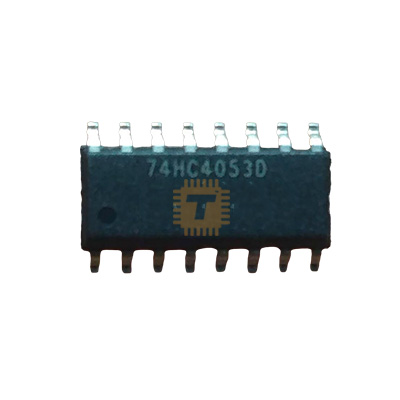
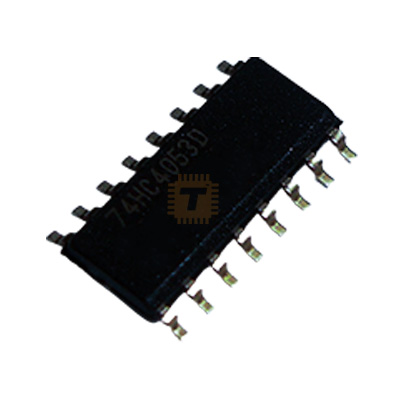
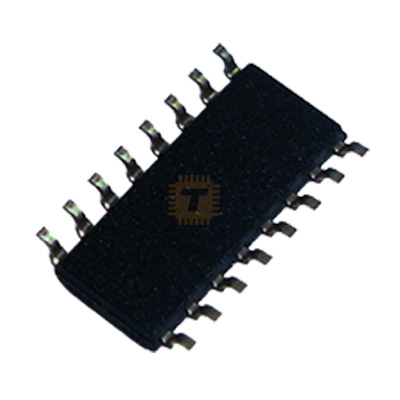
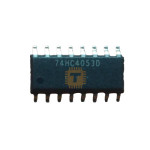
| Name | Original 74HC4053 Triple 2-Channel Analog Multiplexer IC SOP-16 |
| Code | IC0338 |
| Price | Rs.70.00 |
| In Stock | Yes |
| Package | SMD |
Product Details
The 74HC4053 is a high-speed CMOS device featuring three independent 2-channel analog multiplexers or demultiplexers, functionally equivalent to three independent Single Pole Double Throw (SPDT) switches. Each switch has its own control input and two independent ports that can be toggled to a common port. This IC is highly effective for switching between multiple analog or digital signals in compact designs, such as routing stereo audio or managing multiple sensor inputs.
Specifications
- Supply Voltage (Vcc): 2.0V to 10.0V.
- Negative Supply (Vee): Up to -5.0V (allows for bipolar/AC signal switching).
- On-Resistance (Ron): Approximately 80 Ohm (Typical at Vcc - Vee = 9V).
- Bandwidth: 180MHz (Typical), making it suitable for video and high-speed data switching.
- Logic Levels: Compatible with standard TTL and CMOS levels.
- Operating Temperature: Wide range from -40°C to +125°C.
- Package: TSSOP-16 (often labeled as SOP-16).
Features
- Triple Independent Switches: Contains three separate 2-to-1 switches (channels A, B, and C) that can be controlled independently or ganged together.
- Bidirectional Signal Handling: Signals can move from the independent ports to the common port or vice-versa, allowing it to function as both a multiplexer and a demultiplexer.
- Analog & Digital Compatibility: Handles analog signals (like audio or video) as well as digital logic signals.
- Low Distortion and Crosstalk: Designed to maintain signal purity with minimal interference between the three internal switches.
- Break-Before-Make Design: Built-in timing logic ensures one signal path is disconnected before the next is established, preventing signal "bleeding" or momentary shorts.
Common Applications
- Stereo Audio Switching: Using two of the three switches to toggle between two different stereo sources.
- Signal Gating: Using the third switch or the Global Enable pin to mute or disconnect signal paths.
- Sensor Multiplexing: Routing signals from different transducers to a single ADC pin on a microcontroller.
- Digital Data Routing: Switching between different SPI, UART, or I2S data lines.
- Video Signal Routing: Handling composite video signals due to the high 180MHz bandwidth.
Usage Tips
- Voltage Rails: For switching standard 0-5V signals, connect Vee to GND. For signals that go below ground (like raw audio), Vee must be supplied with a negative voltage (e.g., -5V).
- The Enable Pin (E-bar): This pin must be tied to GND for the switches to operate. If it is pulled HIGH, all three switches enter a high-impedance (OFF) state.
- Decoupling: Always place a 0.1uF ceramic capacitor close to the Vcc pin. If using a negative Vee rail, decouple it to GND as well to ensure low-noise signal switching.
- Unused Select Pins: Do not leave the select pins (SA, SB, SC) floating; connect them to GND or Vcc to define a default state.
Sharing is caring, show love and share the product with your friends.
Featured


Add to Cart
Other Products
Add to Cart